Gerfalcon and the Royal Navy Patrol Service
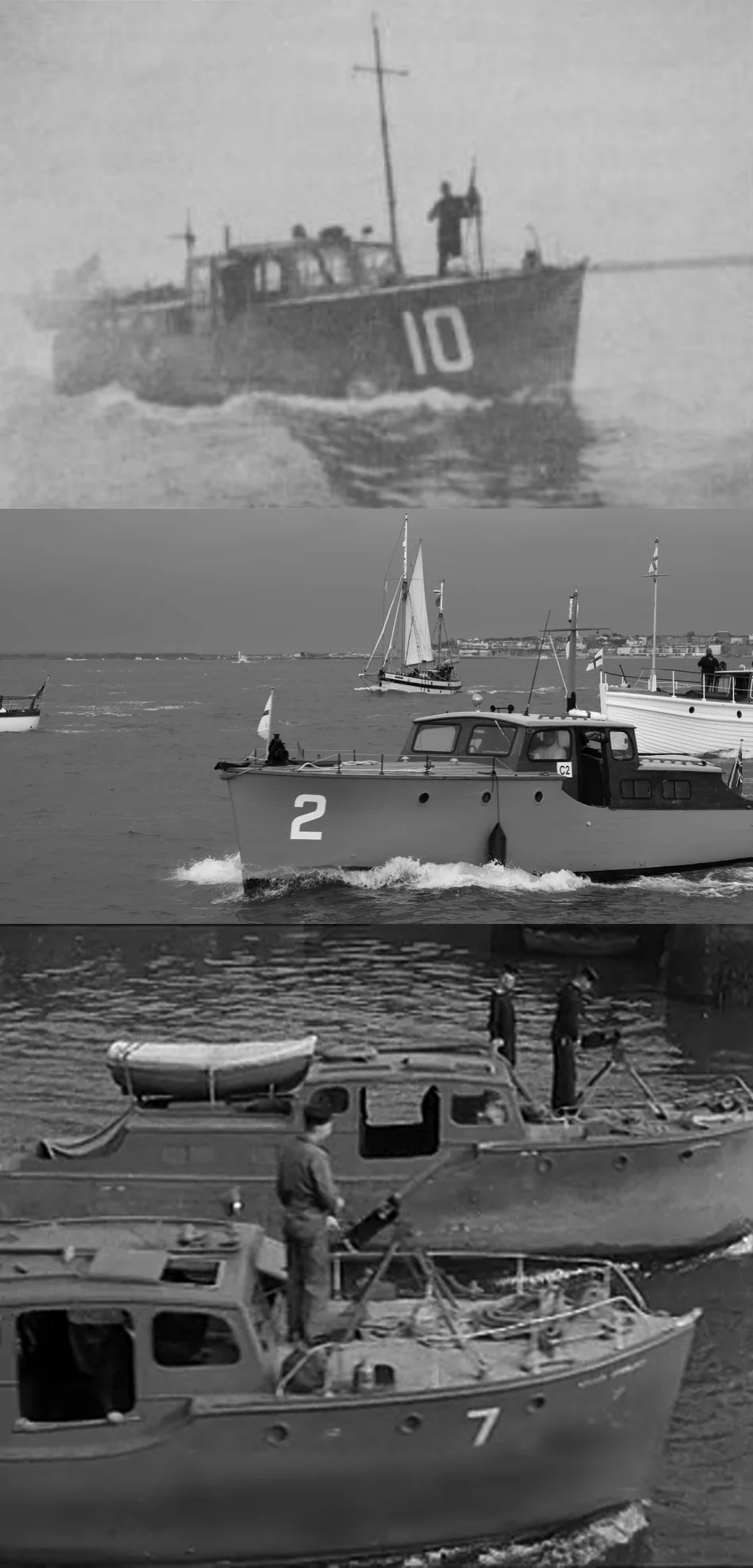
Look at these beautiful Osborne boats — all served with the RNPS in WW2 and at Dunkirk.
Top: Aquabelle, with her fascinating story kindly sent by Colin. Centre: Gerfalcon en route to the 85th anniversary. Bottom: Naiad Errant in the Pathé “Mosquito Navy” reel, with another Osborne boat.
Extraordinary little ships.
What Was the RNPS?
The Royal Naval Patrol Service, often remembered as “Churchill’s Pirates”, was the wartime force that drew together fishermen, yachtsmen, merchant seamen, reservists and volunteers to defend Britain’s coastal waters. Its crews served in trawlers, drifters, launches, motor yachts and other small auxiliary craft, carrying out work that was dangerous, repetitive and essential.
The RNPS was based at HMS Europa in Lowestoft and became a vast network of small-ship service during the Second World War. Its vessels swept mines, escorted convoys, hunted submarines, patrolled harbours and approaches, and supported rescue and evacuation work. Many of the crews worked in craft that had begun life as fishing boats or private vessels before being requisitioned, armed and sent into naval service.
London's Navy and the White Ghost
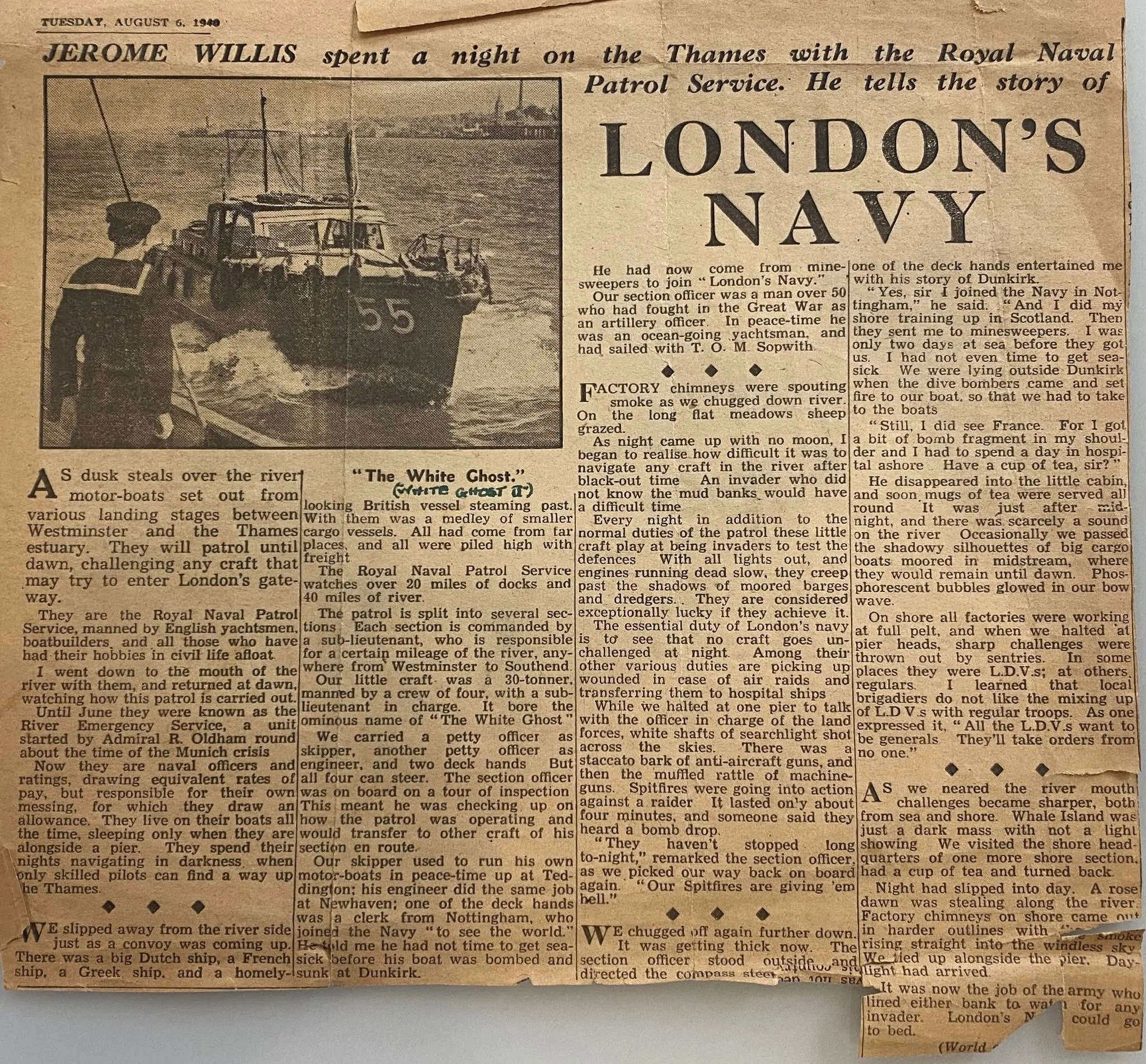
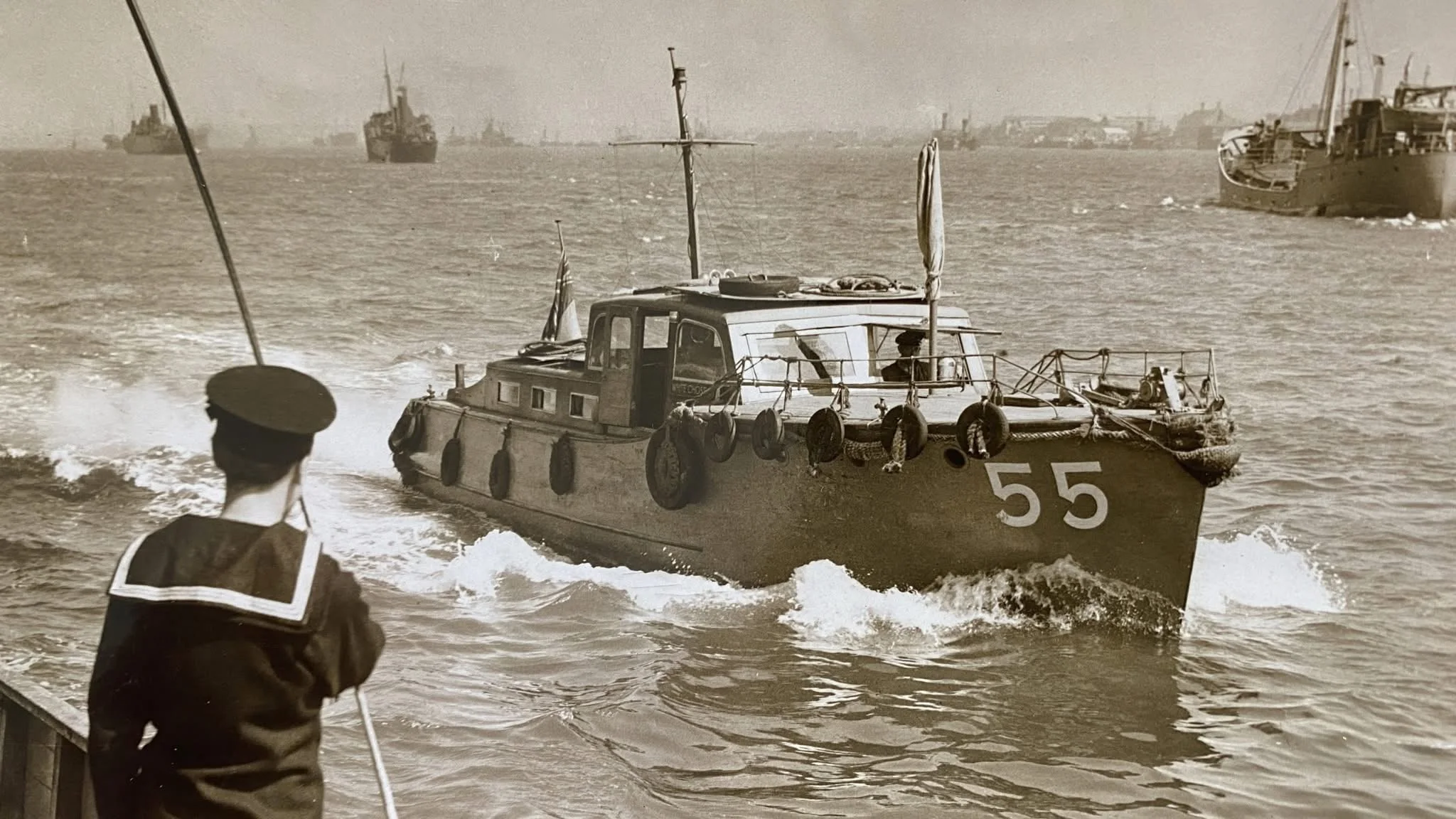
The newspaper cutting, published on Tuesday 6 August 1940 under the title London's Navy, describes a night spent on the Thames with the Royal Naval Patrol Service. It gives a vivid picture of the RNPS at work close to home: motor boats leaving landing stages between Westminster and the Thames estuary, patrolling through the blackout, challenging craft entering London's gateway, and watching over docks, barges and shipping while factories worked through the night.
Among the craft in the article is The White Ghost, another William Osborne boat. The report describes the patrol as a mixture of smaller craft, all drawn from different places and pressed into serious wartime duty. Its crew included men with peacetime experience as yachtsmen, boatmen and engineers, now serving as naval officers and ratings. That is exactly why these small vessels matter: their civilian design, local knowledge and practical seaworthiness were transformed into a defensive network for Britain's rivers, harbours and coastal waters.
The cutting also helps place Gerfalcon in a wider Osborne story. Aquabelle, Gerfalcon, Naiad Errant and The White Ghost show that William Osborne boats made a significant contribution to the naval war effort. They were not simply handsome private motor yachts. In wartime they became patrol boats, evacuation vessels, river guardians and part of the wider “Mosquito Navy” that supported the Royal Navy when small, agile craft were urgently needed.
Why It Matters
The story of the RNPS matters because it shows how Britain’s defence depended not only on capital ships and famous naval battles, but on thousands of small vessels and ordinary seafarers doing difficult work close to home. Minesweeping and patrol work rarely attracted headlines, yet without it the movement of troops, supplies and rescue vessels would have been far more dangerous.
At Dunkirk, the same spirit of small-ship courage became visible to the nation. Boats like Gerfalcon, Aquabelle and Naiad Errant are part of that wider story: privately built craft, often modest in size, pressed into extraordinary service. Their survival helps us explain how local boatyards, volunteer crews and small naval units contributed to Operation Dynamo and to the long coastal war that followed.
Gerfalcon’s later restoration in her Royal Navy patrol boat colours is therefore not just a visual choice. It keeps alive the memory of the RNPS and the thousands who served in vessels like her. It also connects William Osborne’s boatbuilding tradition to the service history of the “Mosquito Navy” and to the people who kept Britain’s shores open in wartime.
For more information, visit the Royal Naval Patrol Service Association.