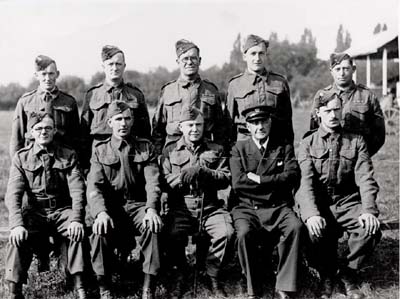
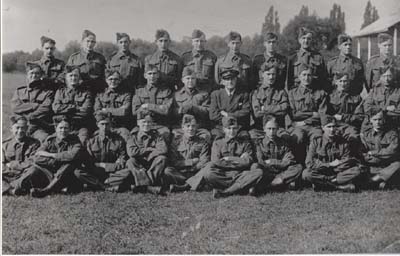
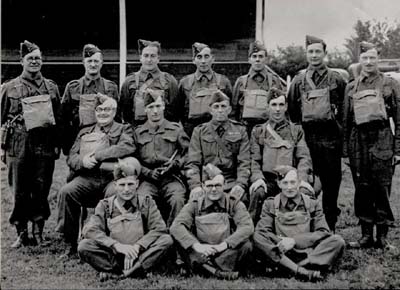
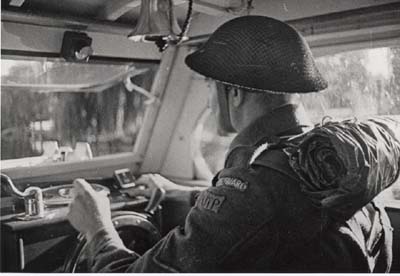
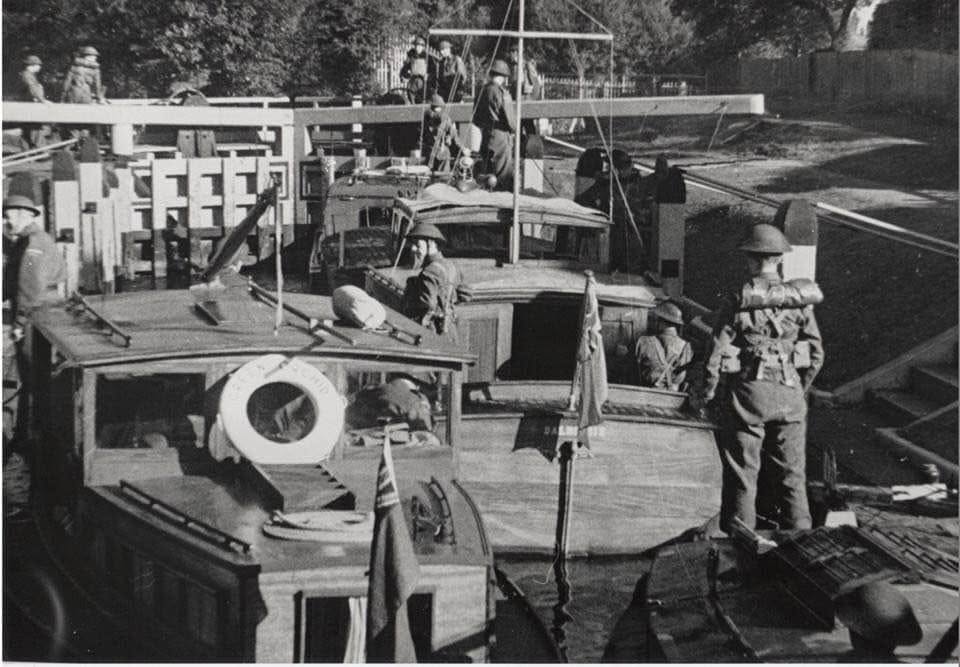
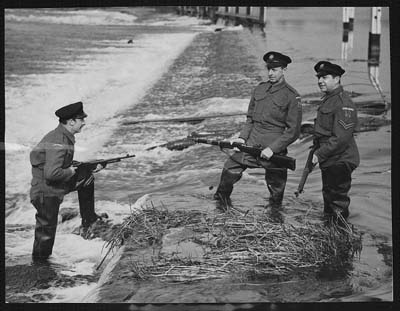
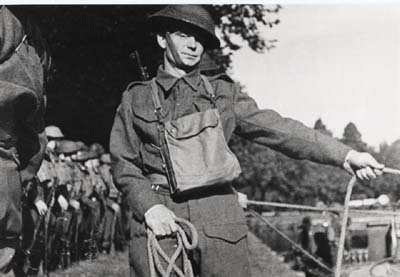
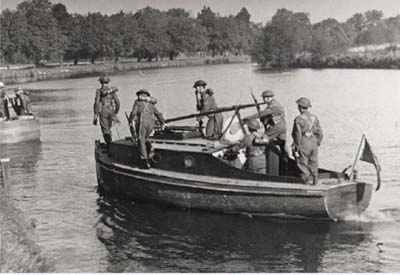
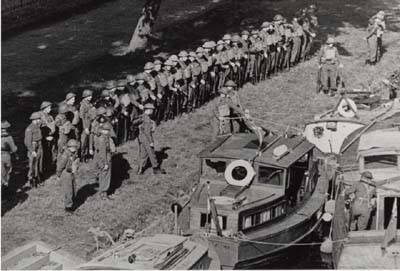
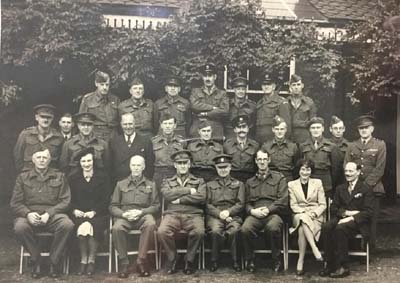
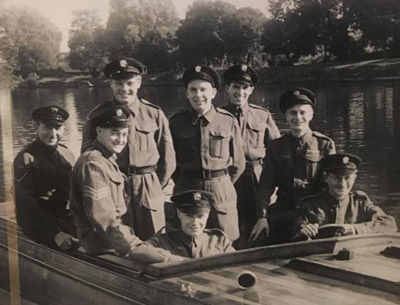
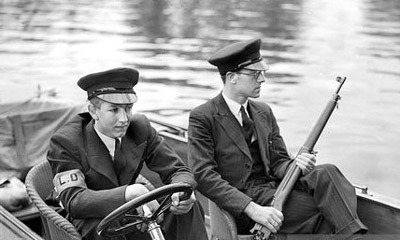
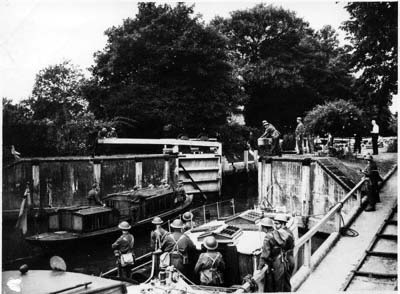
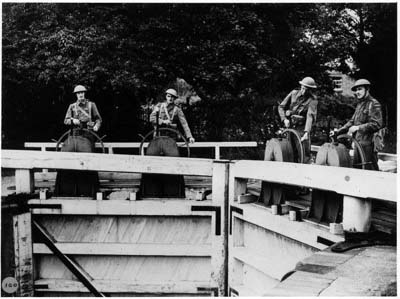
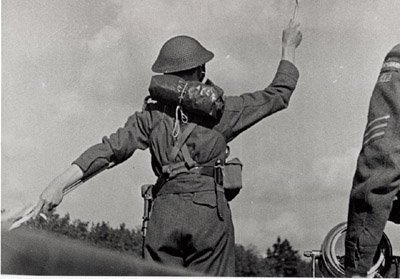
The Home Guard navy that watched the River Thames from Teddington to Lechlade during the Second World War.
The Home Guard Navy of the Upper Thames
The Upper Thames Patrol was started in September 1939 at Abingdon by Sir Ralph Glyn, MP for Abingdon, before the Local Defence Volunteers and Home Guard had been formed. It began as a water-borne local defence force with support from the Thames Conservancy and the War Office.
Its job was to patrol and protect the Thames as a strategic barrier against invasion, watching locks, bridges, weirs, rail crossings, landing places and riverside infrastructure. It quickly expanded to cover the river from Lechlade to Teddington.
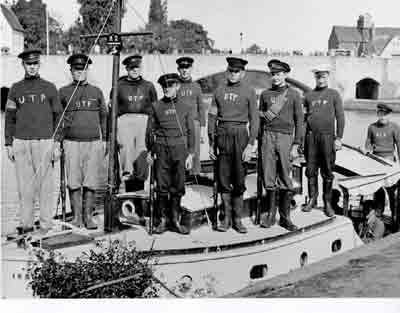
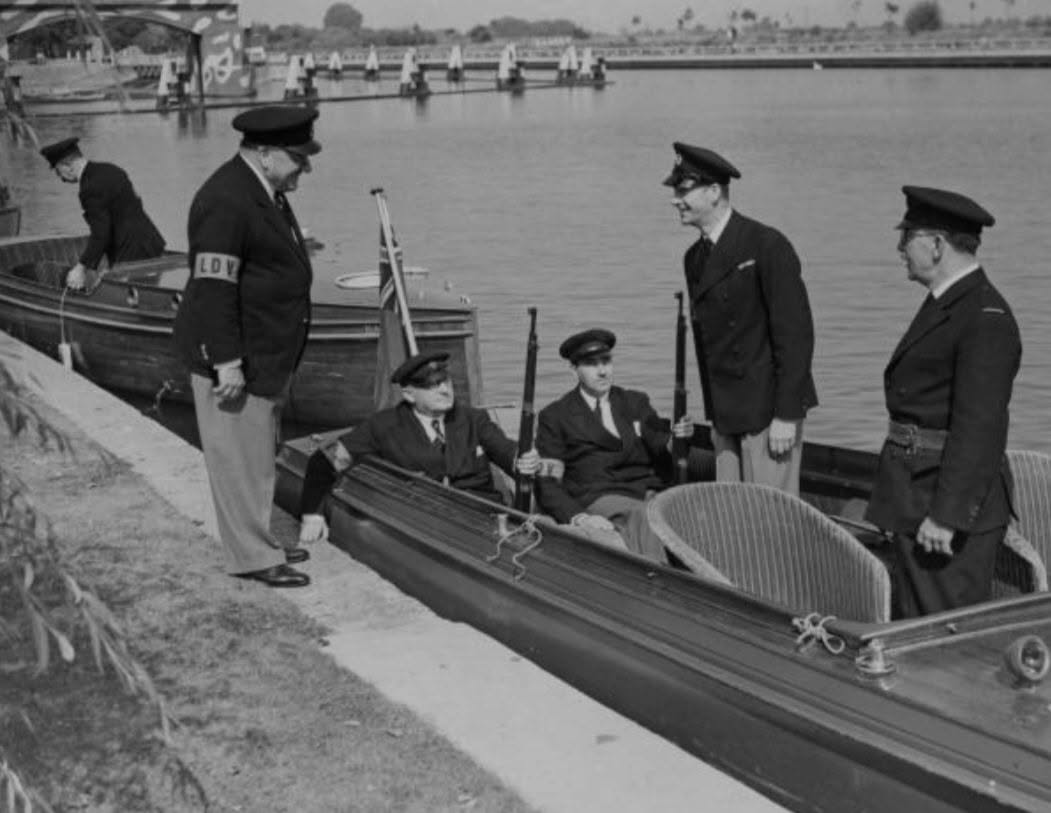
The UTP was the Home Guard Navy. Jokingly known as “Up The Pub”, probably because many local headquarters were based in pubs, it grew into a force of about 6,000 men and women at its height. By 1942 it had 116 boats under command, made up of slipper launches and cruisers. Out of the 260 boats believed to have served, only eight are currently known to survive: seven in the UK and one in the US.
Timeline and Historical Context
September 1939 Sir Ralph Glyn starts the Upper Thames Patrol at Abingdon, before the Local Defence Volunteers and Home Guard are formed.
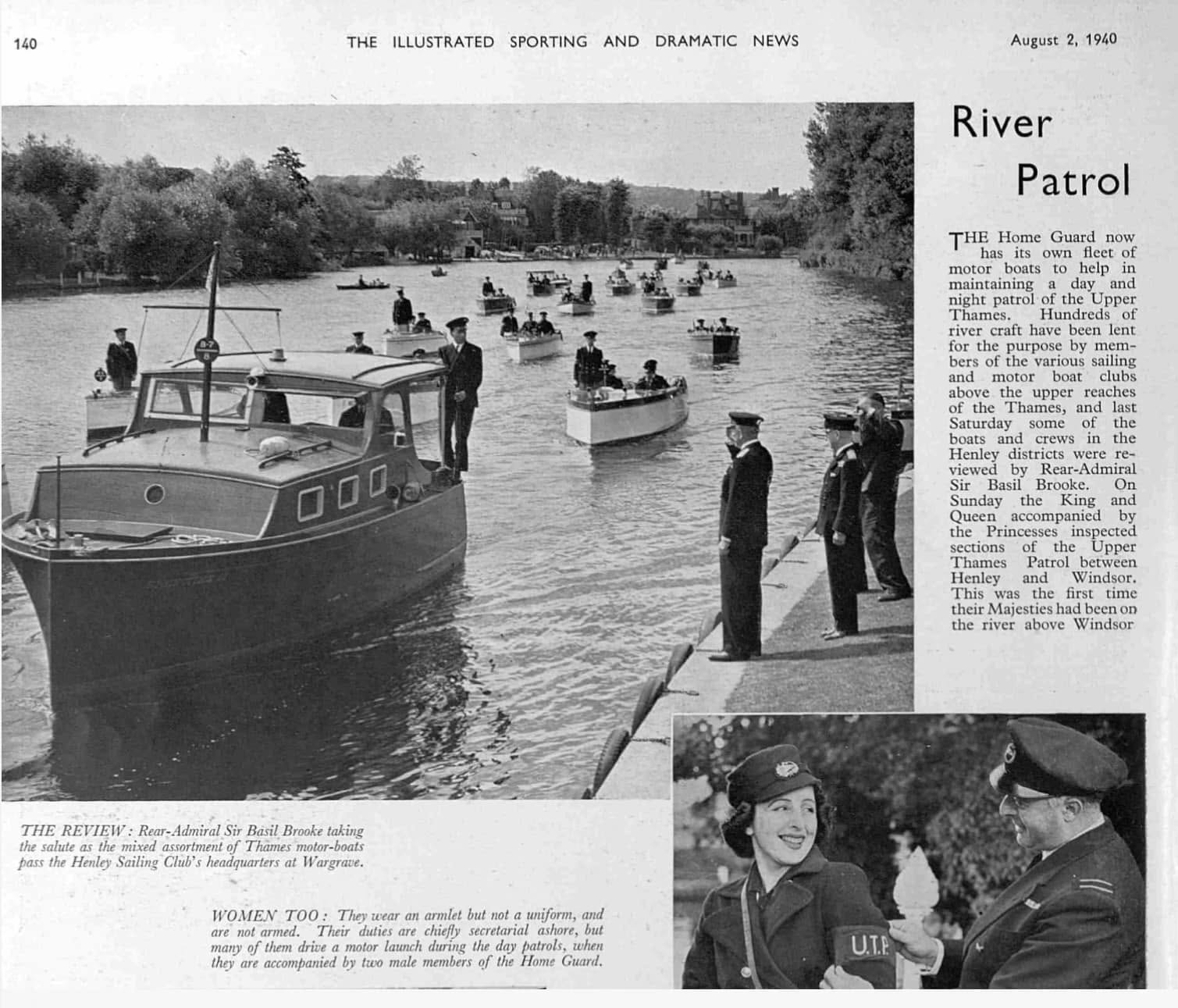
8 April 1940 Rear Admiral Sir Basil Brooke inspects UTP boats near Wargrave, one of several early demonstrations of the patrol's readiness.
June 1940 The UTP is reorganised into two companies: one water-borne and one for shore duties.
29 August 1940 More than 40 women join at Wallingford, reflecting the UTP's unusual use of women as helms and crew.
1942 The UTP has 116 boats under command, including slipper launches and cruisers.
1940-1944 Patrol members train in boat handling, water-borne operations, signalling, guard duties and standard Home Guard skills.
September 1944 The Upper Thames Patrol is dissolved as the invasion threat recedes and wartime priorities change.
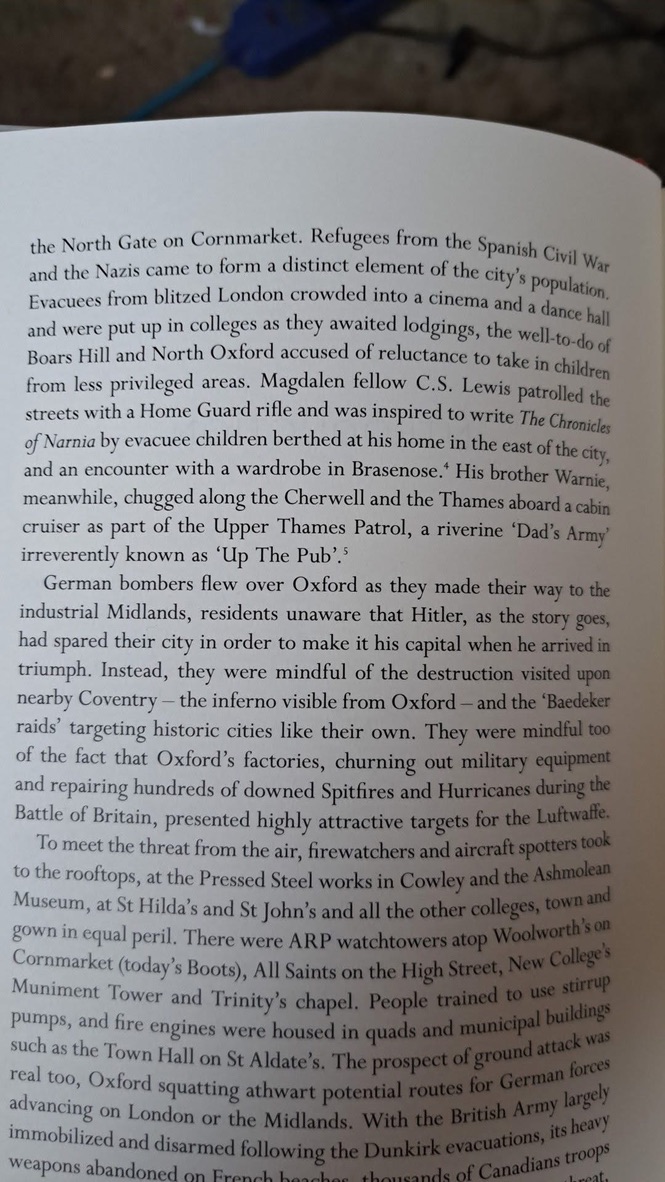
Oxford gives the patrol a vivid local setting. While C.S. Lewis patrolled the city streets with a Home Guard rifle, his brother Warren “Warnie” Lewis served on the Cherwell and Thames aboard a cabin cruiser as part of the Upper Thames Patrol. The article describes the UTP as a riverine “Dad’s Army”, a phrase that catches both its volunteer character and its serious purpose.
“Up The Pub” context Article extract describing Warren Lewis serving with the Upper Thames Patrol, a riverine Dad's Army irreverently known as “Up The Pub”.
The Thames 250 wartime exhibition adds wider context: the Thames was not just a scenic river during the war. It was a route, a boundary, a defensive obstacle, a workplace and a target. Its bridges, weirs and locks had to be understood as possible points of vulnerability, while riverside yards and engineering firms contributed directly to wartime production.
The wider threat was real. German bombers crossed Oxfordshire on routes towards the Midlands, and Oxford’s factories, aircraft repair work, colleges, museums and civic buildings all sat within a wartime landscape of ARP watchtowers, firewatching, evacuation and invasion planning. The UTP belongs in that Home Front world: local people using local knowledge to protect a river that mattered strategically.
Royal Mail Dunkirk Stamps and a UTP Misidentification
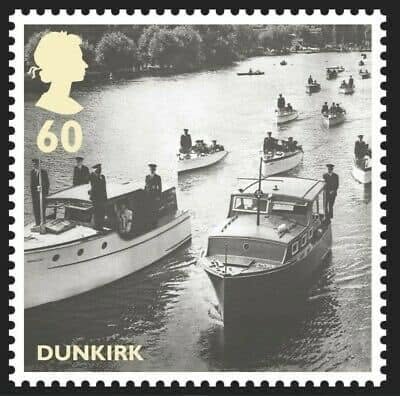
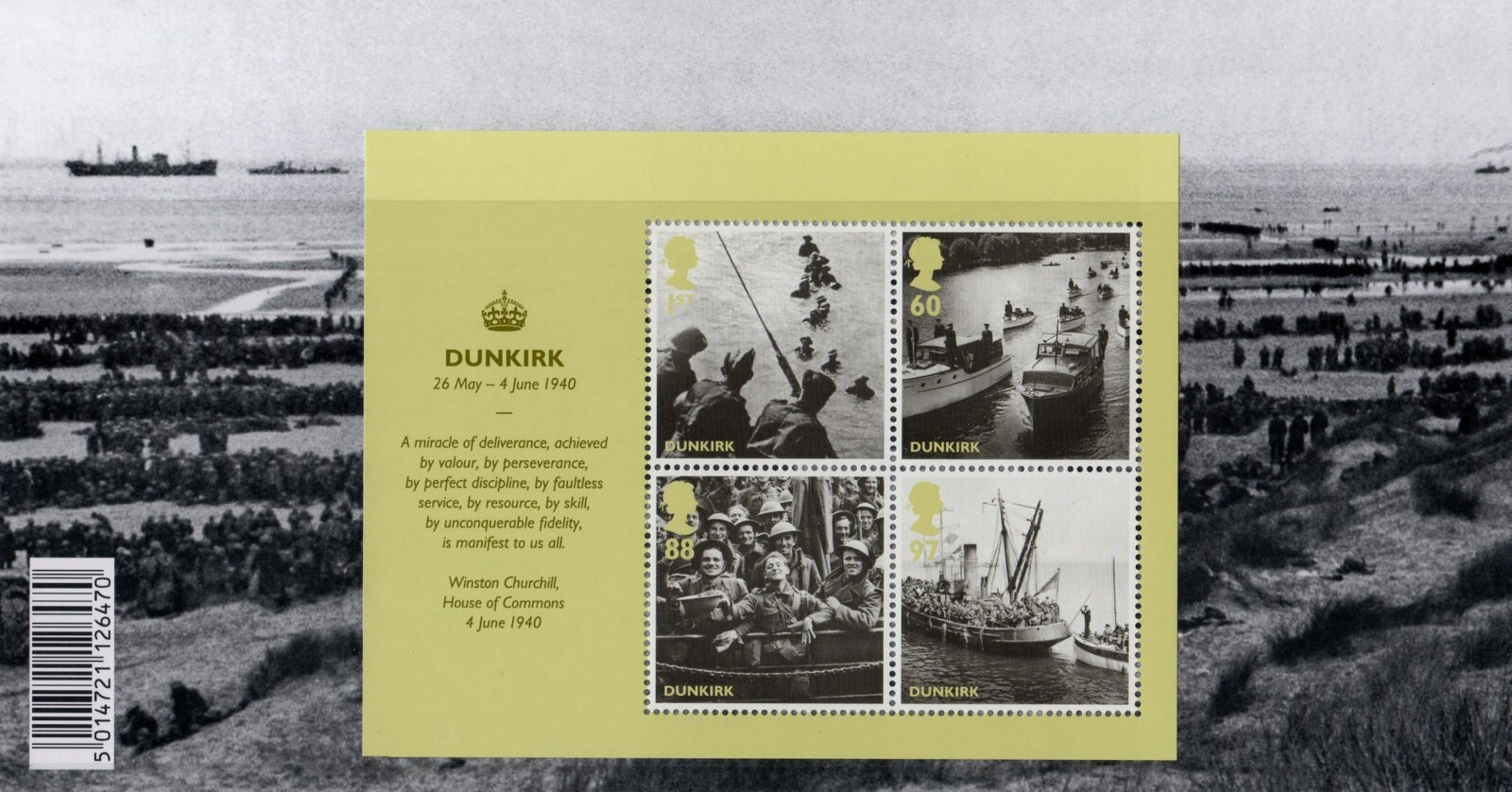
Royal Mail produced a commemorative stamp sheet for Operation Dynamo, the evacuation from Dunkirk between 26 May and 4 June 1940. The sheet uses four wartime images under the Dunkirk heading, but the image in the top right is not associated with Dunkirk.
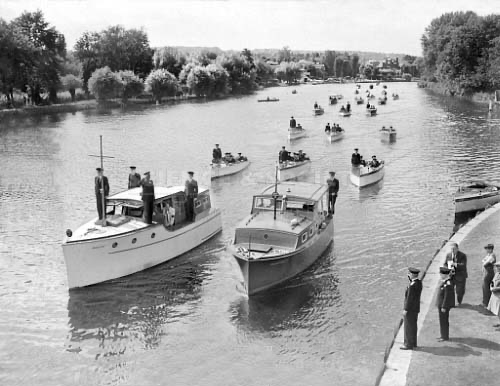
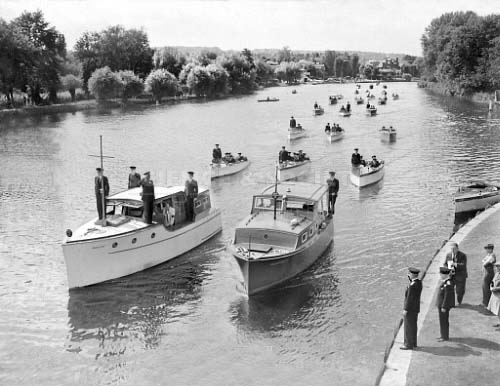
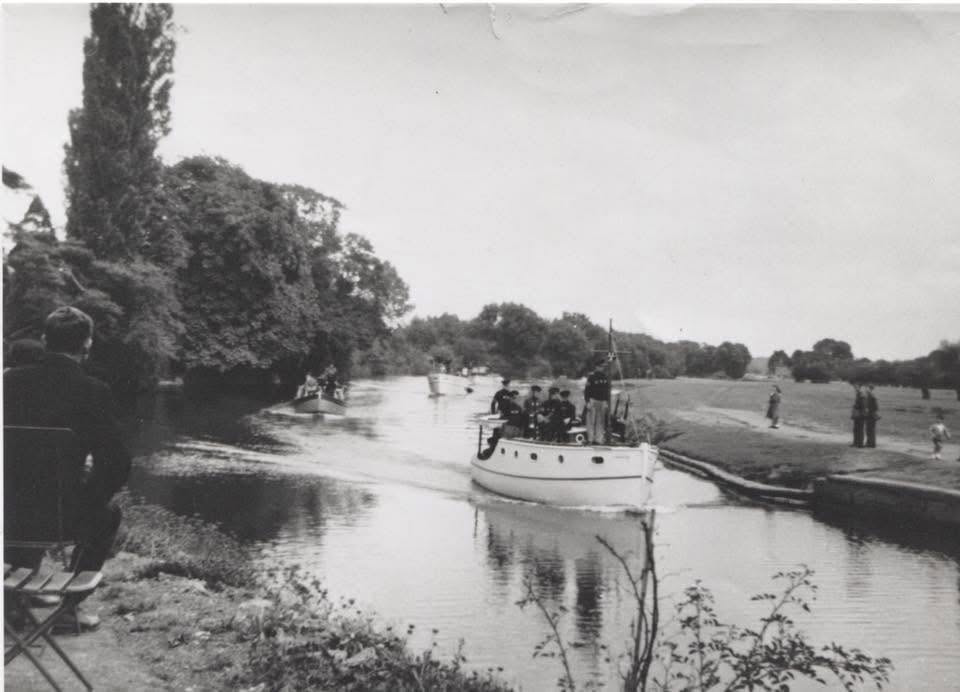
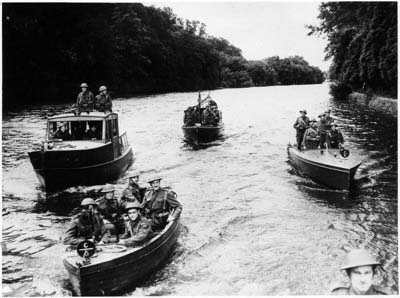
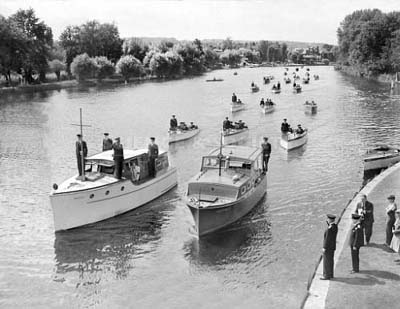
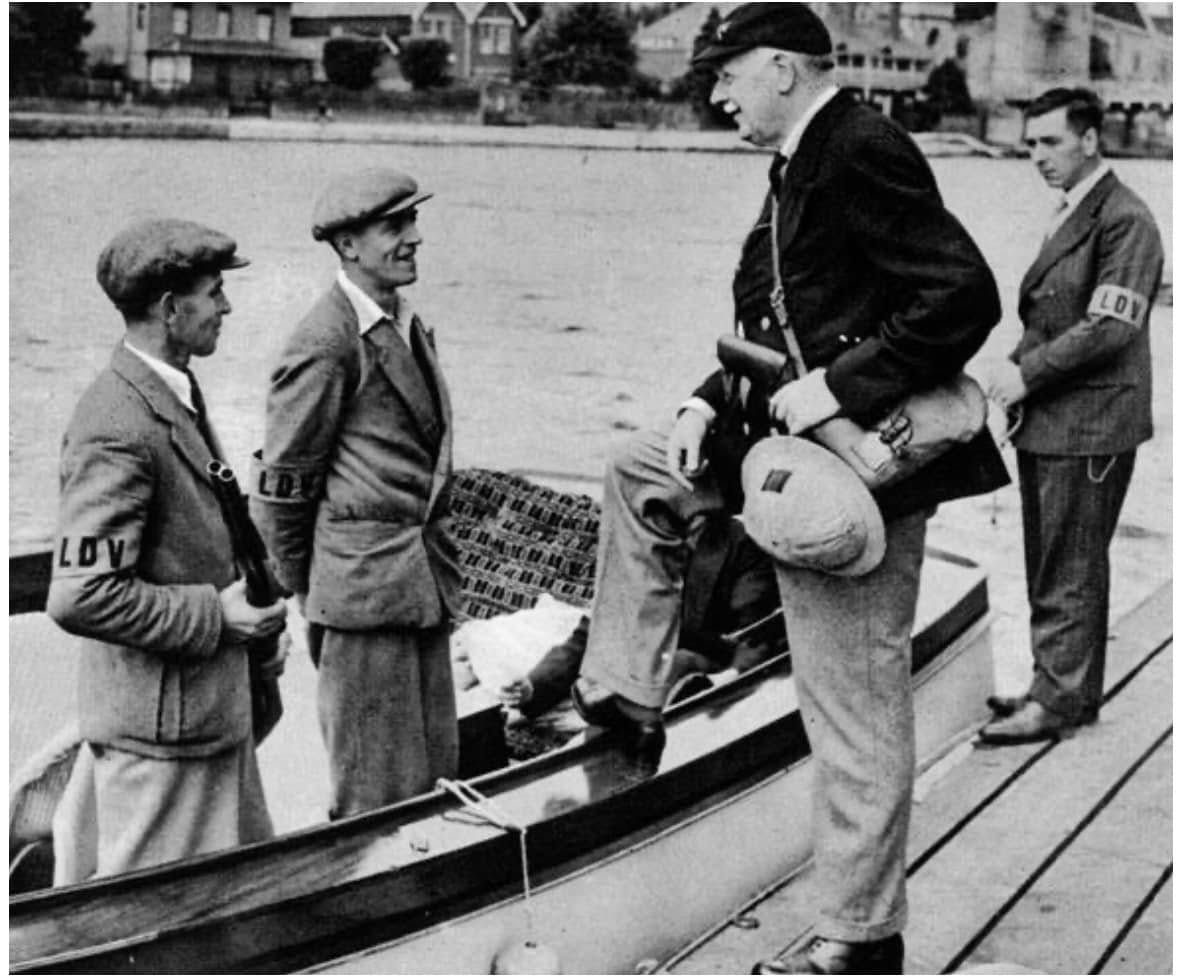
The incorrect stamp. This Dunkirk stamp appears to use an Upper Thames Patrol review image rather than a Dunkirk evacuation scene.UTP review, early August 1940. The stamp is a cropped version of this Upper Thames Patrol review, not a Dunkirk evacuation photograph.
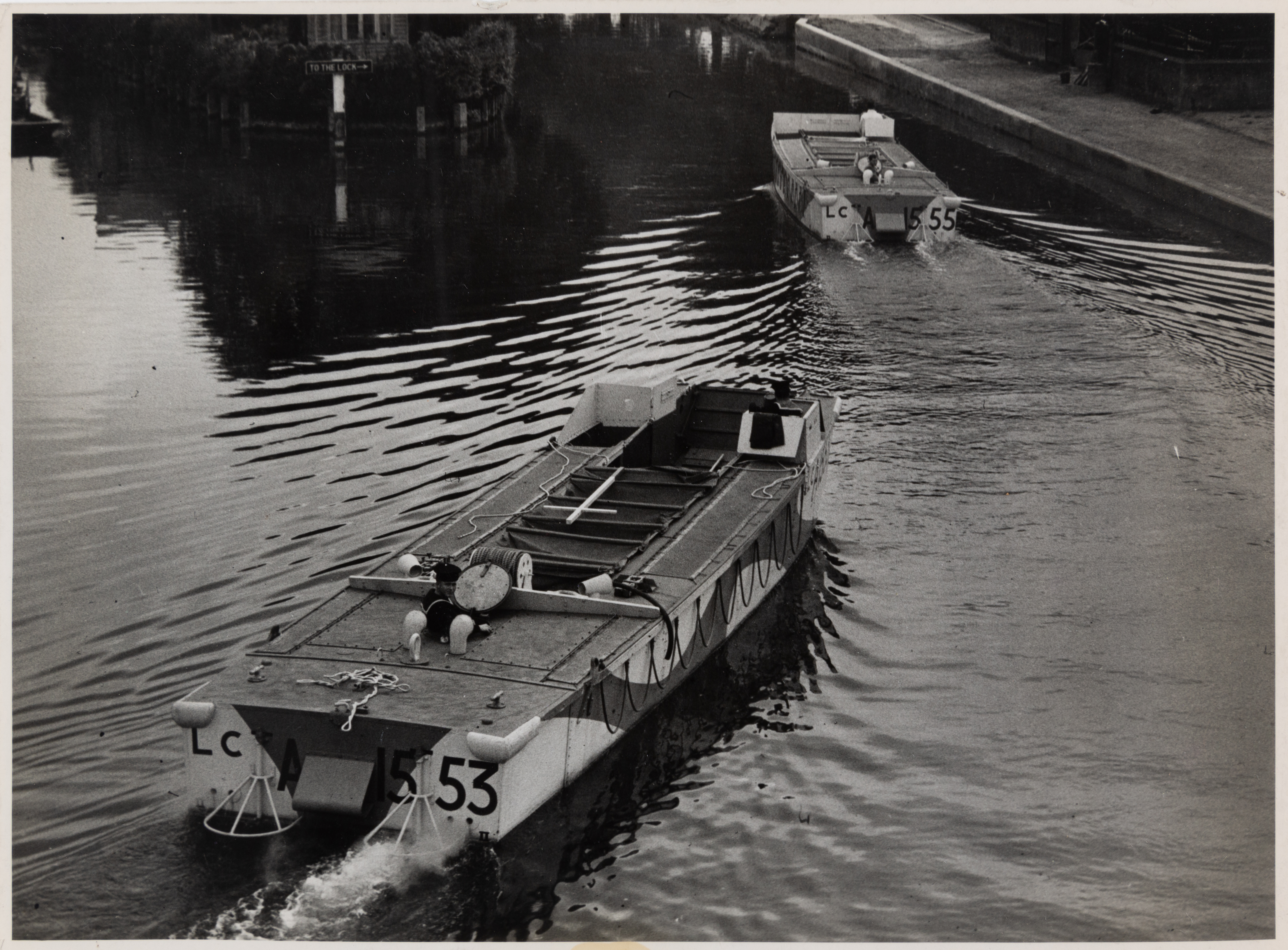
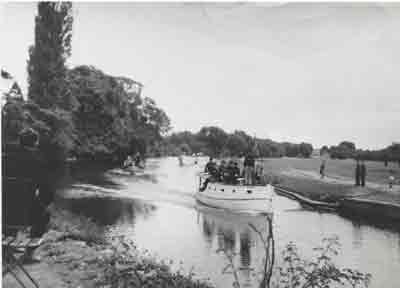
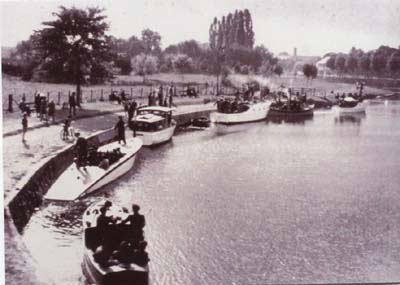
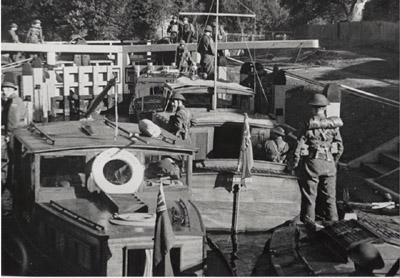
That photograph shows the Local Defence Volunteers, later the British Home Guard, on the river with the Upper Thames Patrol. The craft are too small for the Dunkirk evacuation context, and the personnel are wearing LDV badges. The River Patrol took place in August 1940, with the UTP guarding bridges, locks and the Thames, cruising downriver to a review by their Commander-in-Chief, Rear Admiral Sir Basil Brooke.
Upper Thames Patrol at Wargrave Sailing Club, near Henley, August 1940. This parade is often reused as though it shows boats of Dunkirk, and a similar image even appeared on a Dunkirk stamp, but the scene is the Upper Thames Patrol on the river. The article identifies the Home Guard's river patrol and shows Rear Admiral Sir Basil Brooke taking the salute as Thames motor boats pass the Henley Sailing Club headquarters at Wargrave.
Royal Mail Dunkirk stamp sheet The top-right stamp image appears to show the Upper Thames Patrol rather than a Dunkirk scene.Fuller UTP review image A wider view of the review by Rear Admiral Sir Basil Brooke, matching the stamp image context.
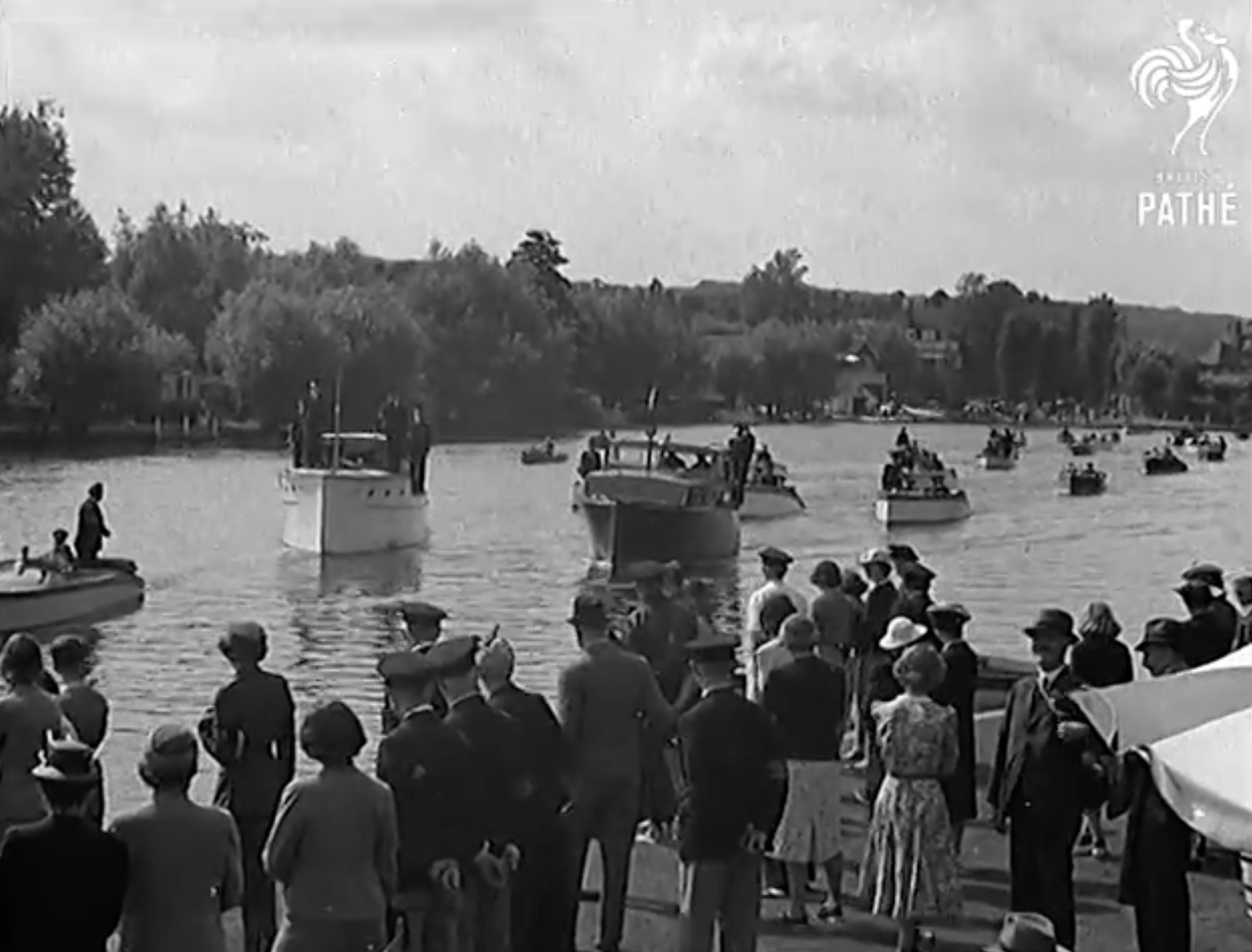
The same review can be seen in the British Pathé film Home Guard Navy (1940), which shows the Upper Thames Patrol on the river rather than at Dunkirk.
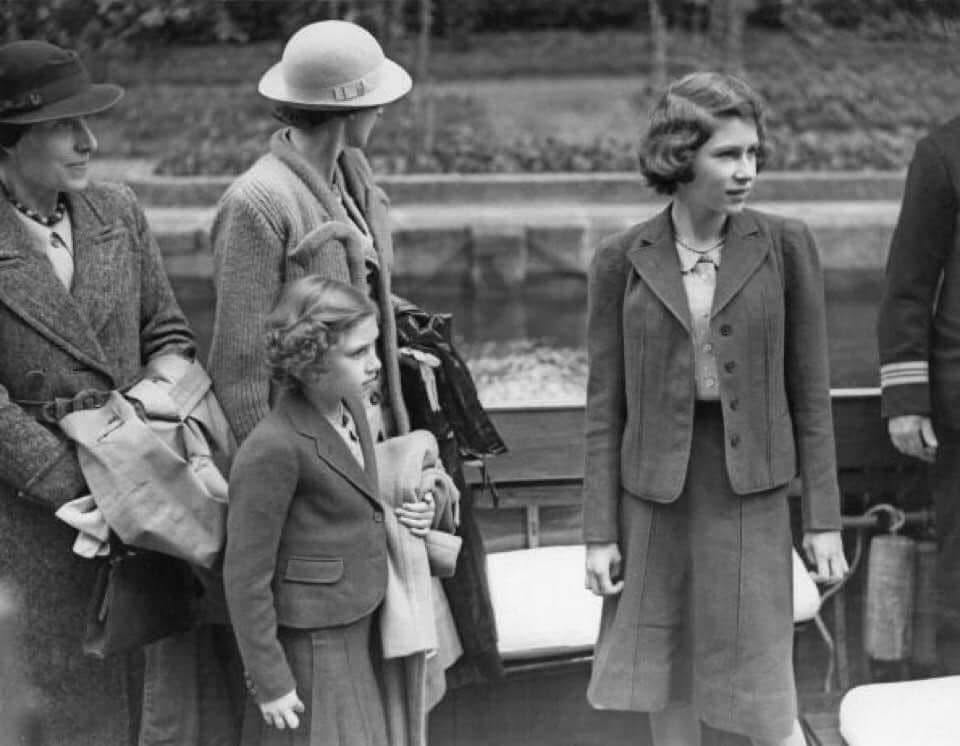
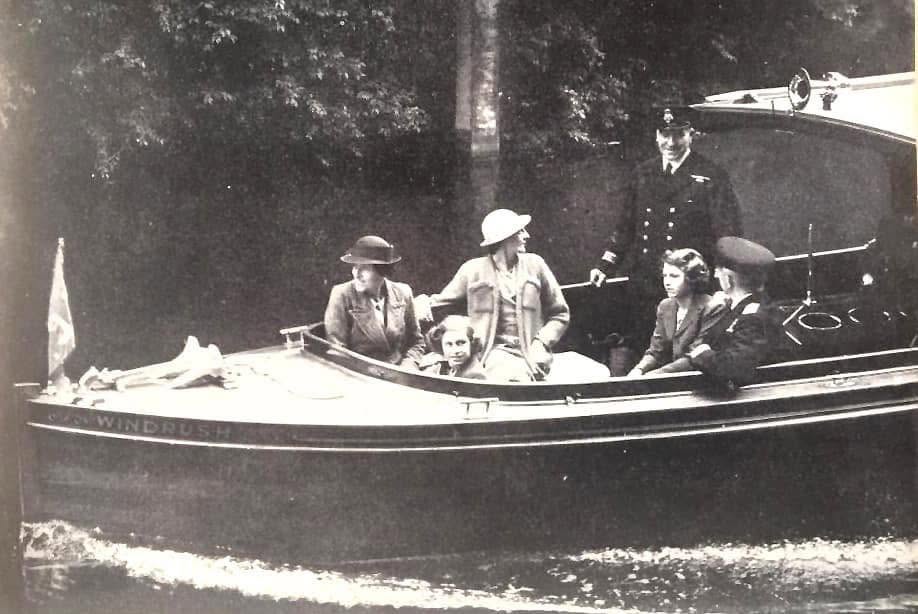
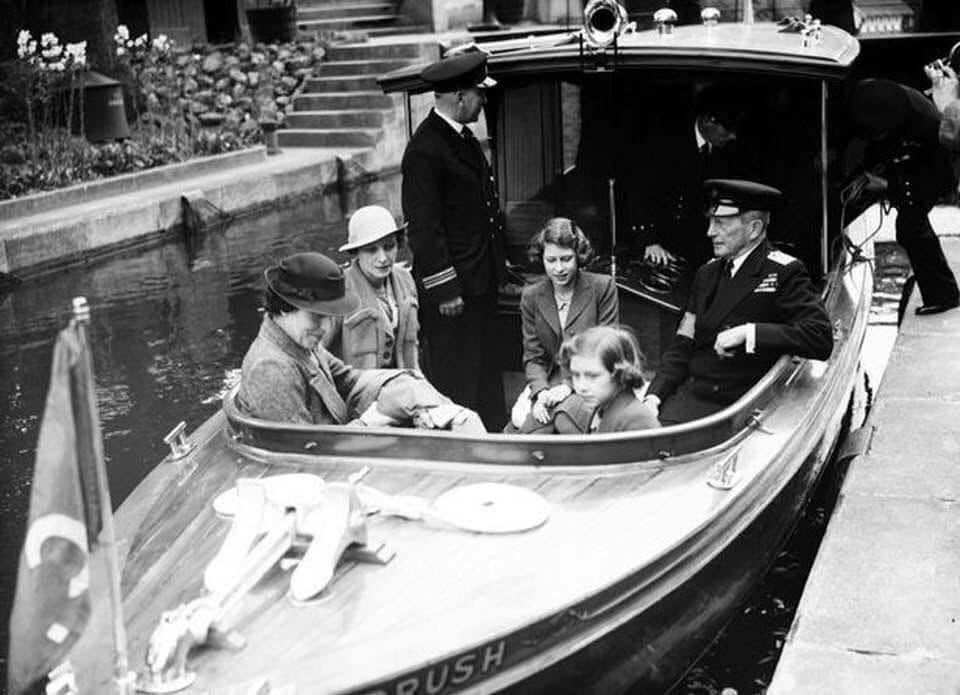
In July 1940, Upper Thames Patrol Zone Commander Rear Admiral Sir Basil Vernon Brooke, Commander of the Home Guard Navy, was photographed on the River Thames during a royal visit with the two Princesses at Boulters Lock. The photographs show the party aboard and alongside Windrush, with Brooke still wearing an LDV armband, a useful reminder that the UTP sat in the early Local Defence Volunteers moment before the Home Guard name became familiar.
Other photographs show boats of the Upper Thames Patrol, the Home Guard Navy, on their way to a royal review or inspection by Home Park, Windsor. One view was probably taken from King George V Bridge, looking towards the patrol boats as they moved upriver for the inspection.
The visit places the UTP in a wider Home Front story. The patrol was not only a practical river defence force guarding bridges, locks and approaches; it was also visible enough in 1940 to receive high-profile attention while Britain prepared for invasion.
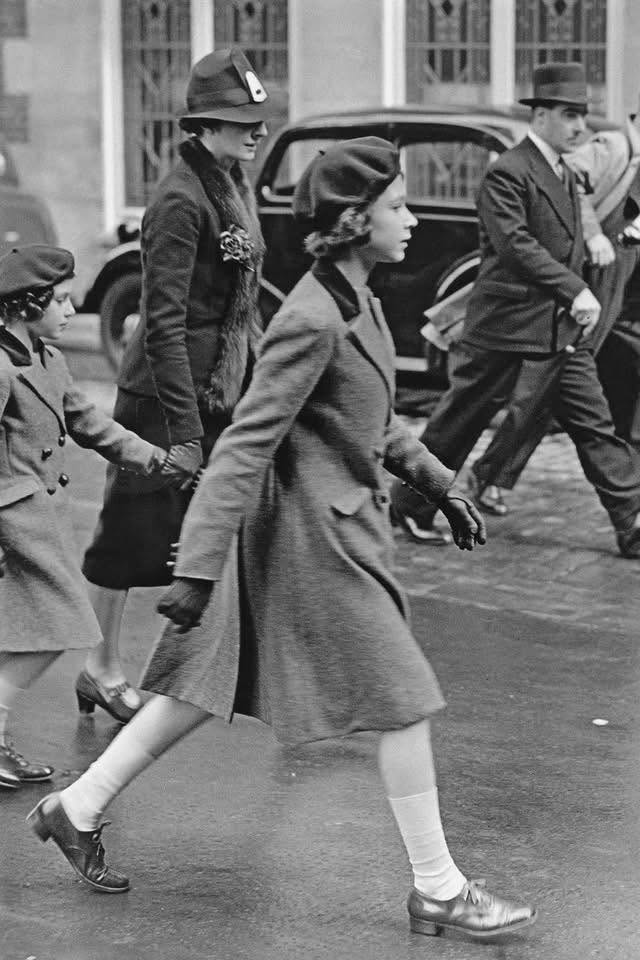
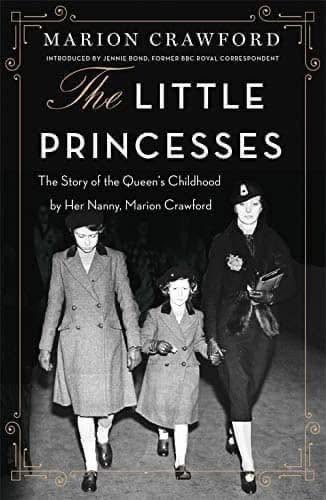
Boulters Lock, July 1940 The two Princesses with the royal party during the Upper Thames Patrol visit, accompanied by their governess and naval personnel.Arrival for the visit The two Princesses arriving with their governess before joining the river party.Aboard Windrush The royal party aboard Windrush on the Thames during the UTP visit.Rear Admiral Sir Basil Vernon Brooke Brooke, Commander of the Home Guard Navy, aboard Windrush with the royal party; note the LDV armband.The Little Princesses A later book cover showing the two Princesses with their governess, included here as context for the royal visit photographs.
Thames 250 Exhibition Context
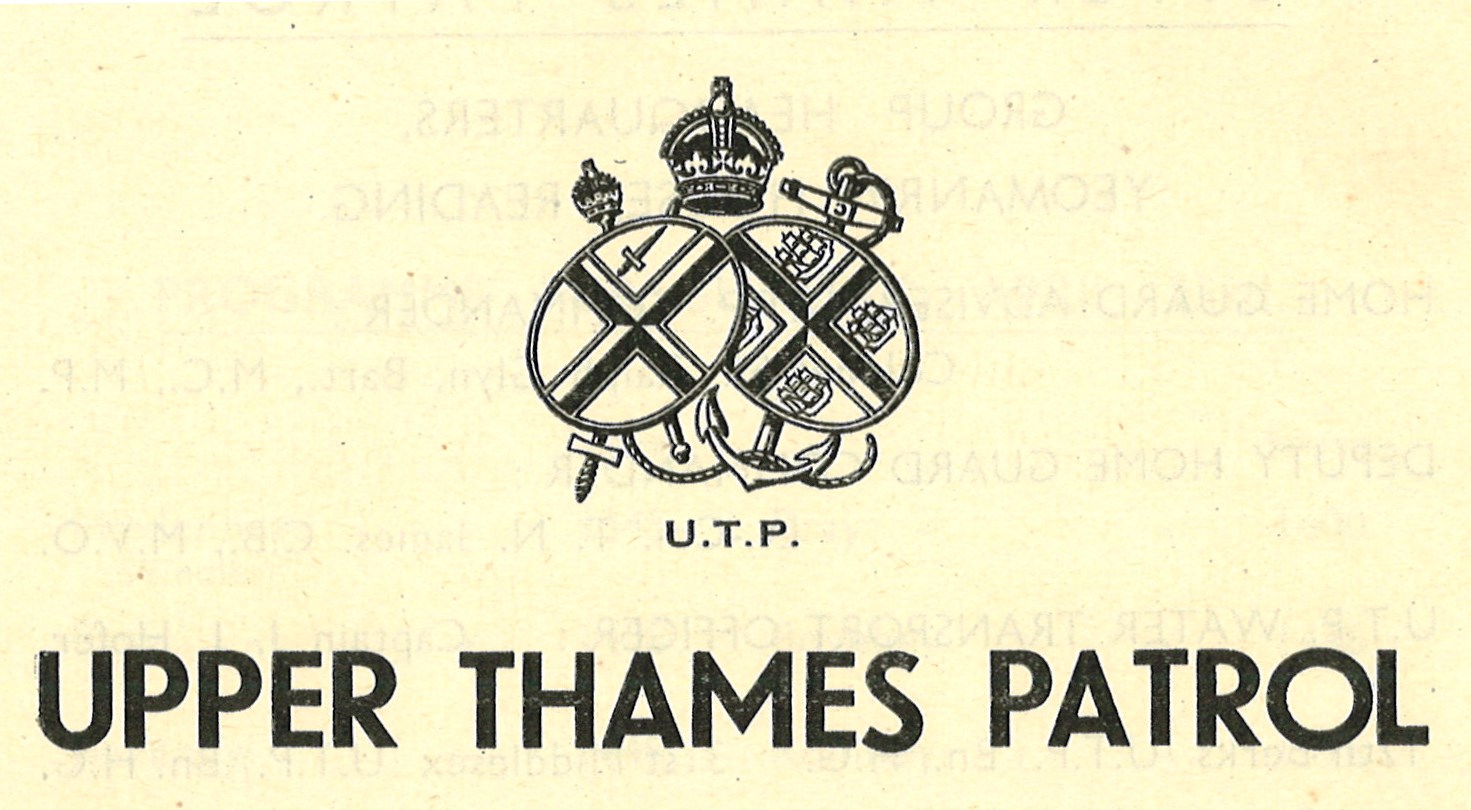
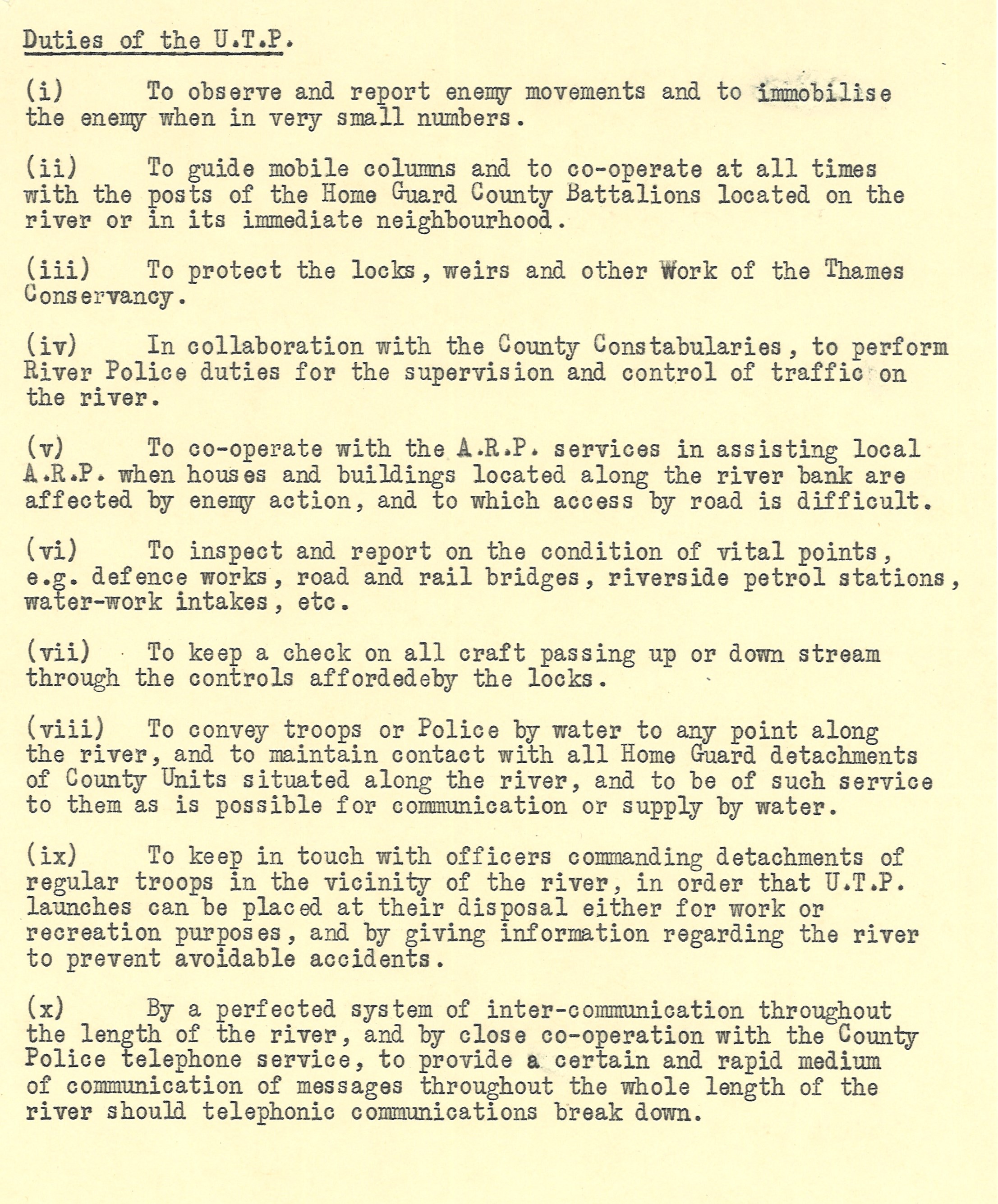
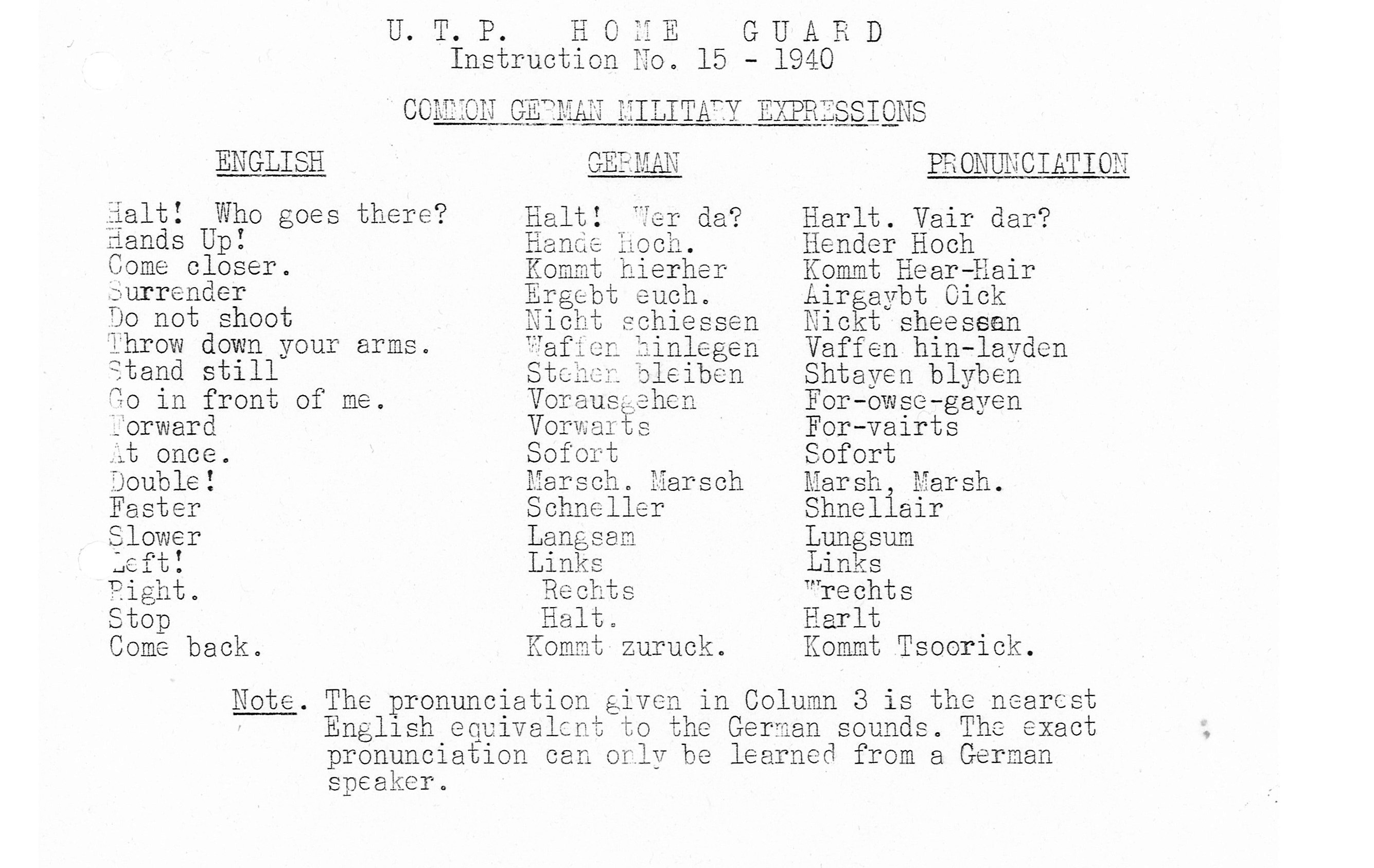
UTP cap badge The Upper Thames Patrol badge used by the Home Guard Navy, preserved in the Thames 250 wartime exhibition material.Duties of the UTP A 1940 duties sheet showing the practical, disciplined nature of the patrol's work.Invasion training Training material such as German phrases shows how seriously local defence preparations were taken.Thames industry at war The river's wartime story included local engineering and boatbuilding as well as patrol work.
Gordon Thackrah and UTP Archive Items
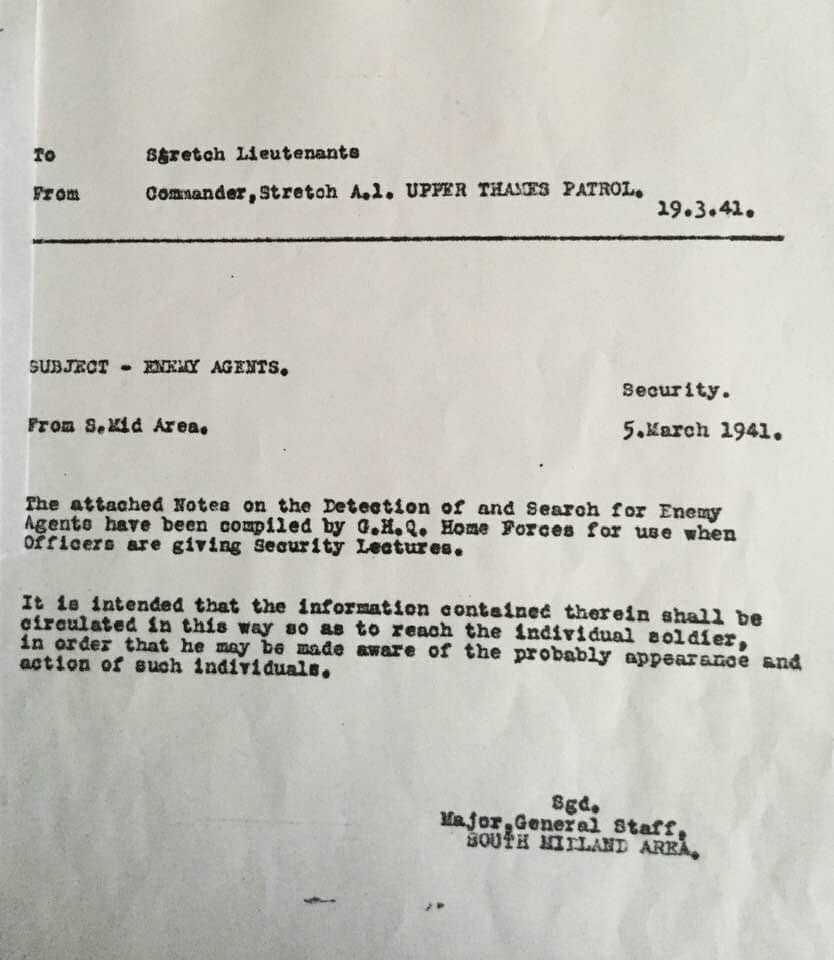
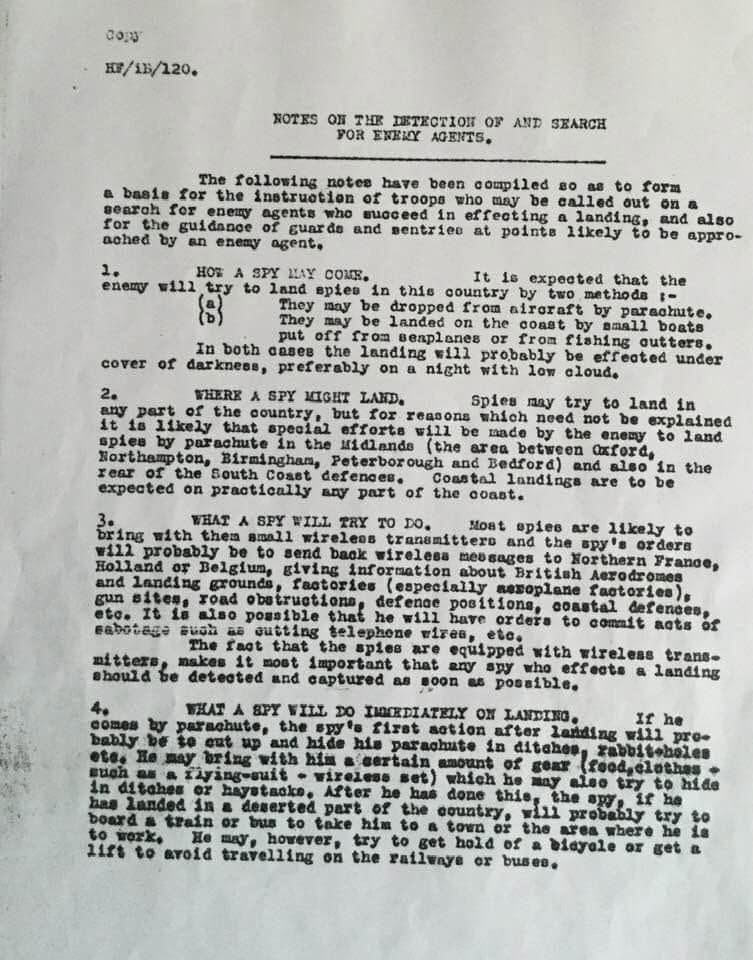
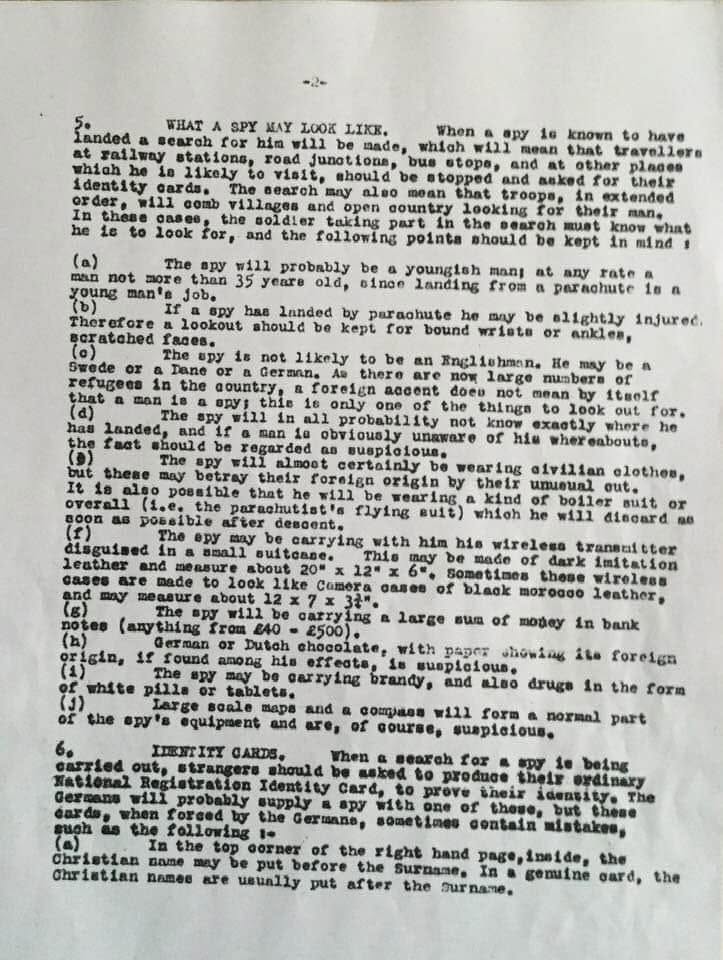
These personal and administrative Upper Thames Patrol items include Gordon Thackrah's records, letters about Mrs Thackrah's shore patrol support, and security guidance circulated to the 12th Berks (U.T.P.) Battalion Home Guard.
Gordon and Mrs Thackrah Papers
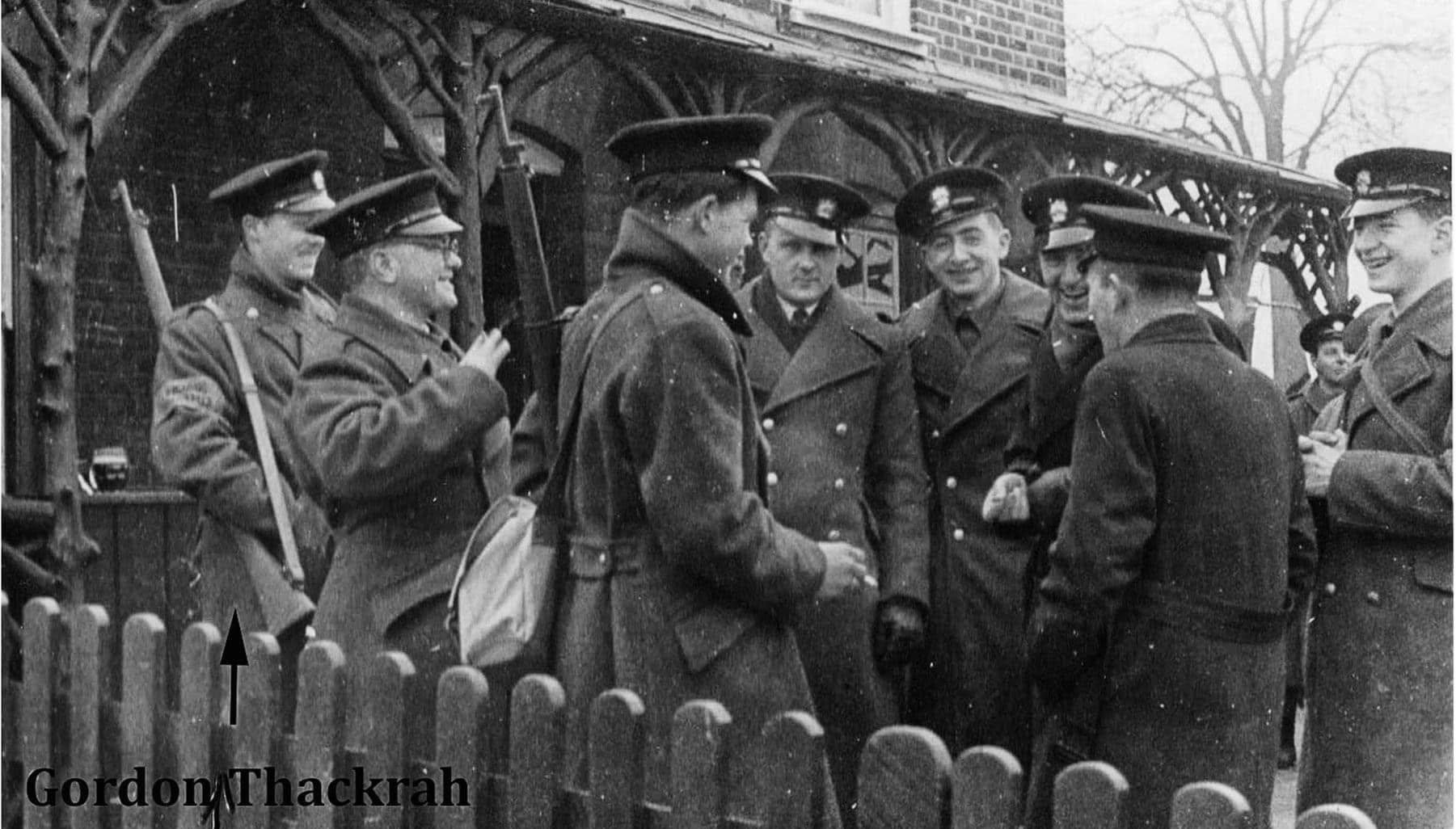
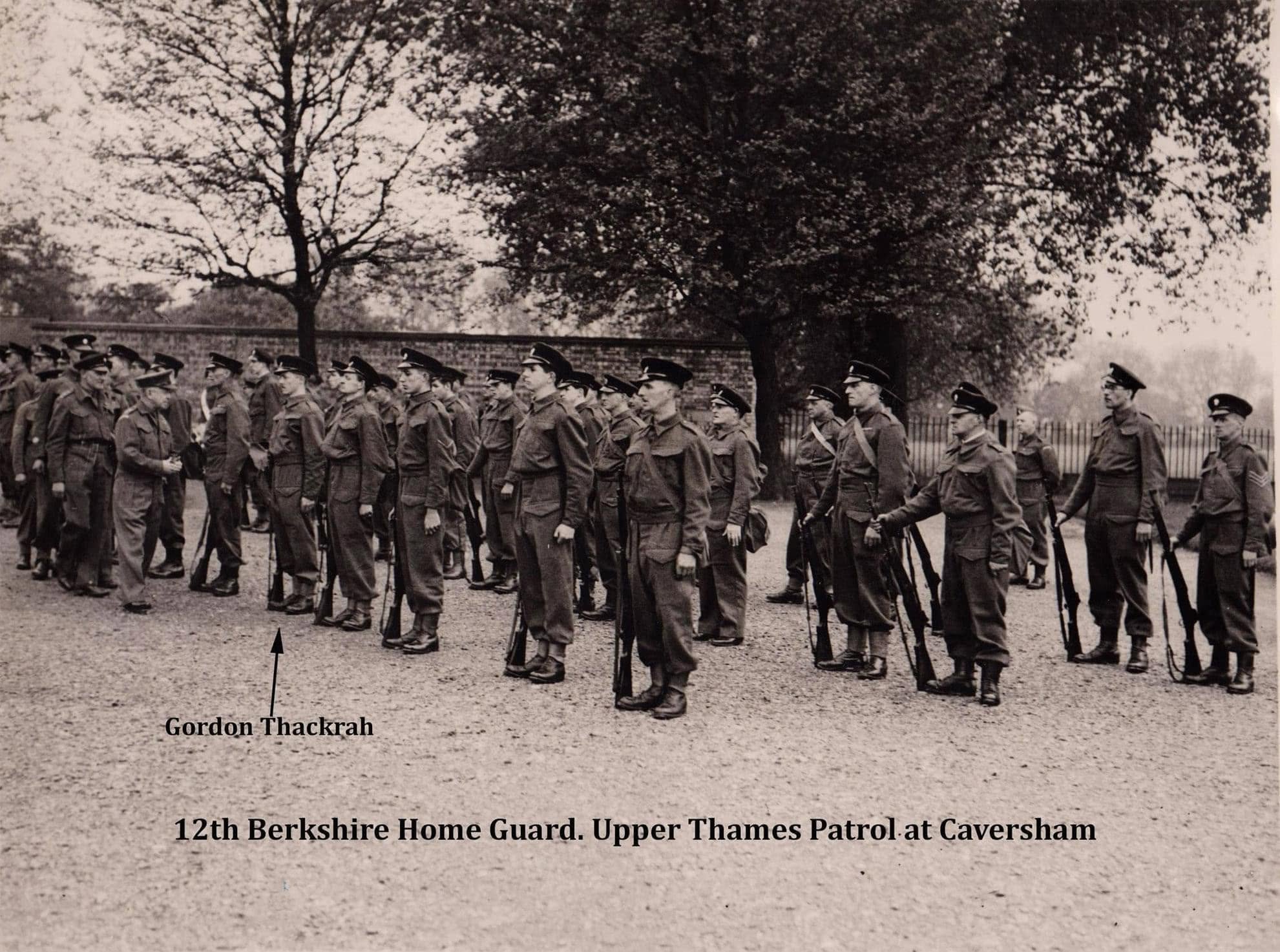
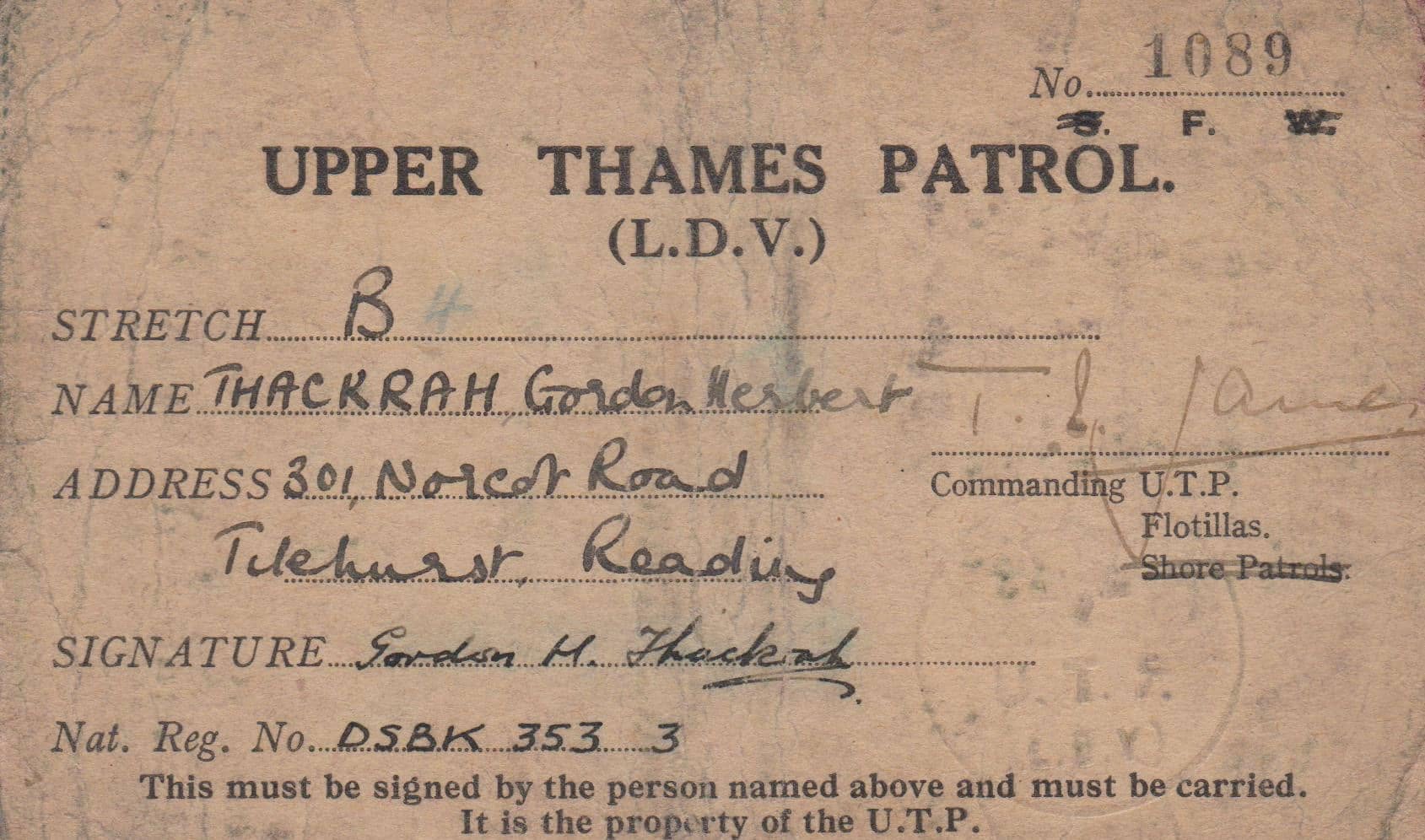
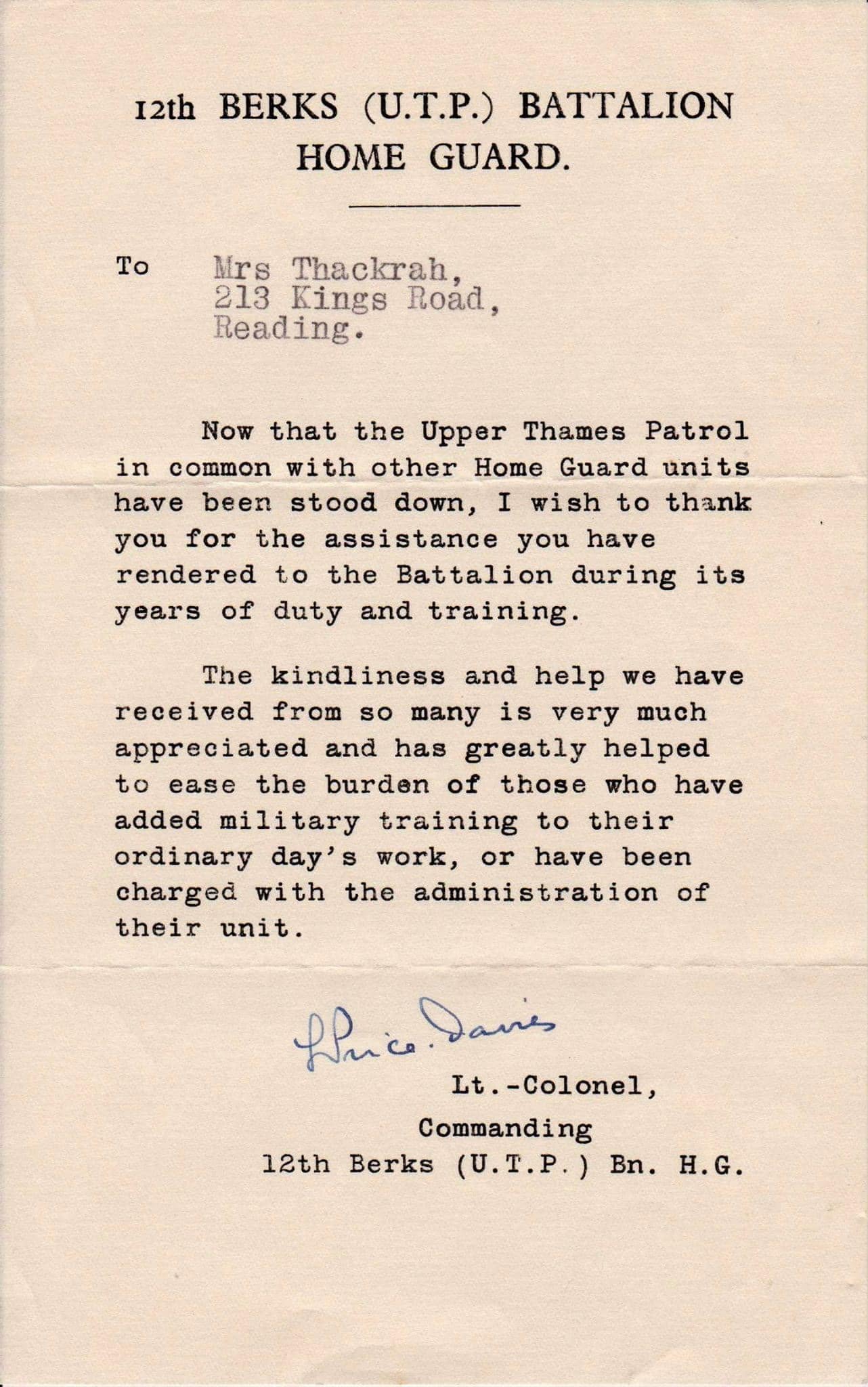
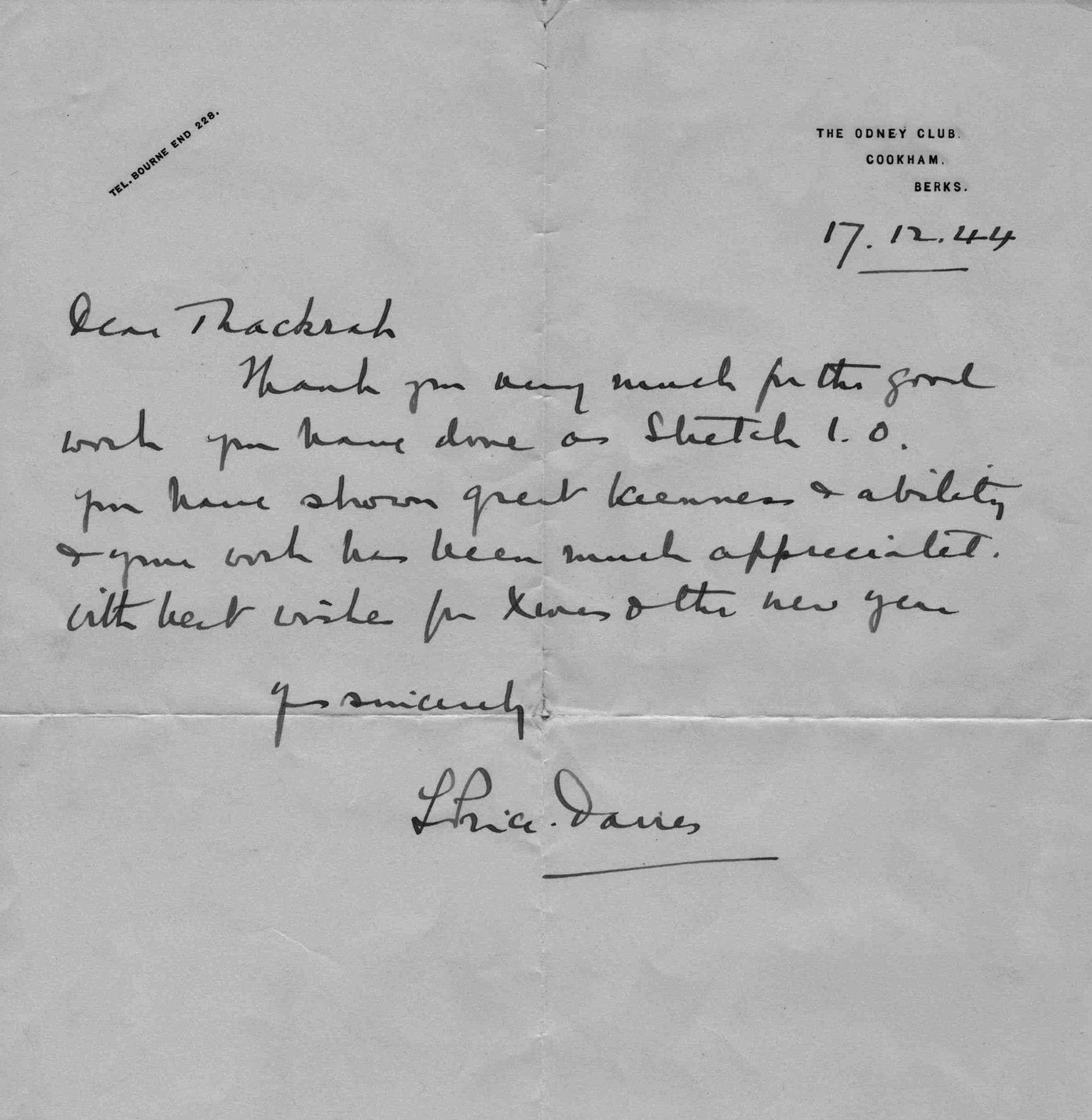
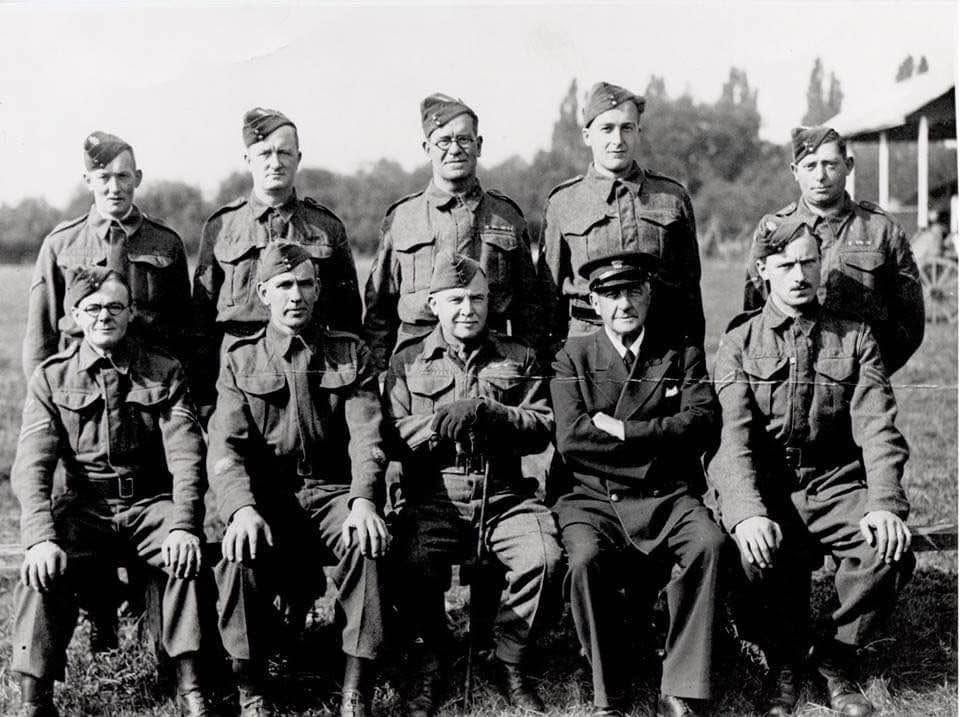
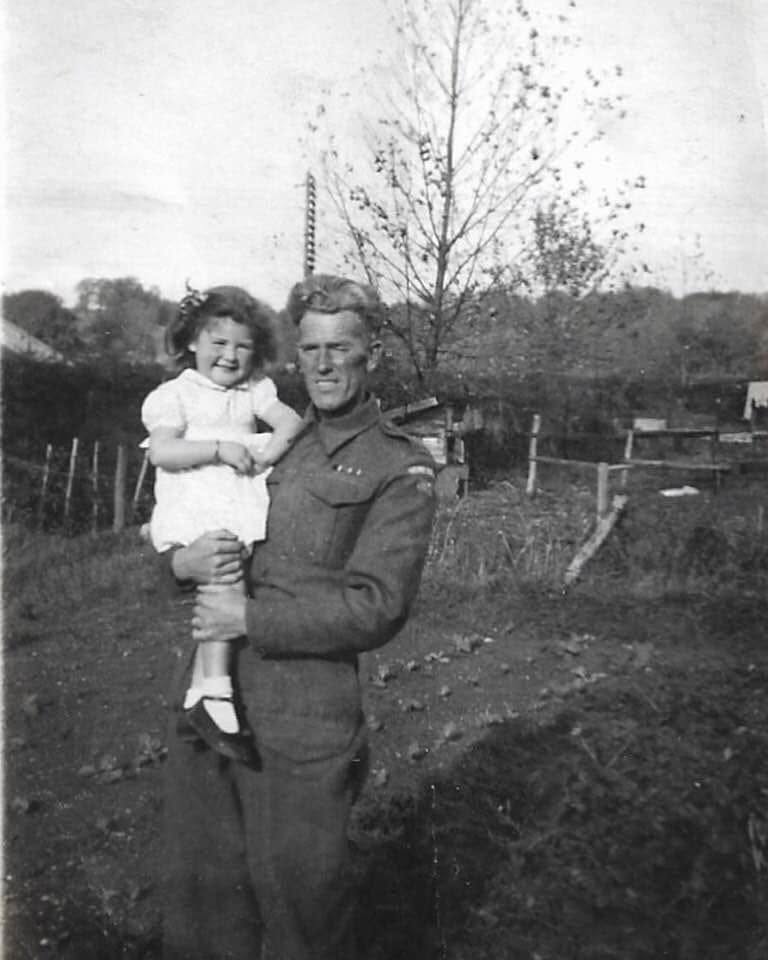
Gordon Thackrah Gordon Thackrah identified among Upper Thames Patrol members.12th Berkshire UTP at Caversham Gordon Thackrah identified in a 12th Berkshire Home Guard Upper Thames Patrol group at Caversham.UTP identity card Upper Thames Patrol (L.D.V.) identity card for Gordon Herbert Thackrah, Stretch B4, Tylehurst Road, Reading.Mrs Thackrah letter A 12th Berks (U.T.P.) Battalion Home Guard letter thanking Mrs Thackrah for assistance rendered during the battalion's years of duty and training.Letter from Phric Davis A handwritten note to Mrs Thackrah thanking her for work done on Stretch 1.0 and for her keenness and ability.
Membership Card and Cap Badge
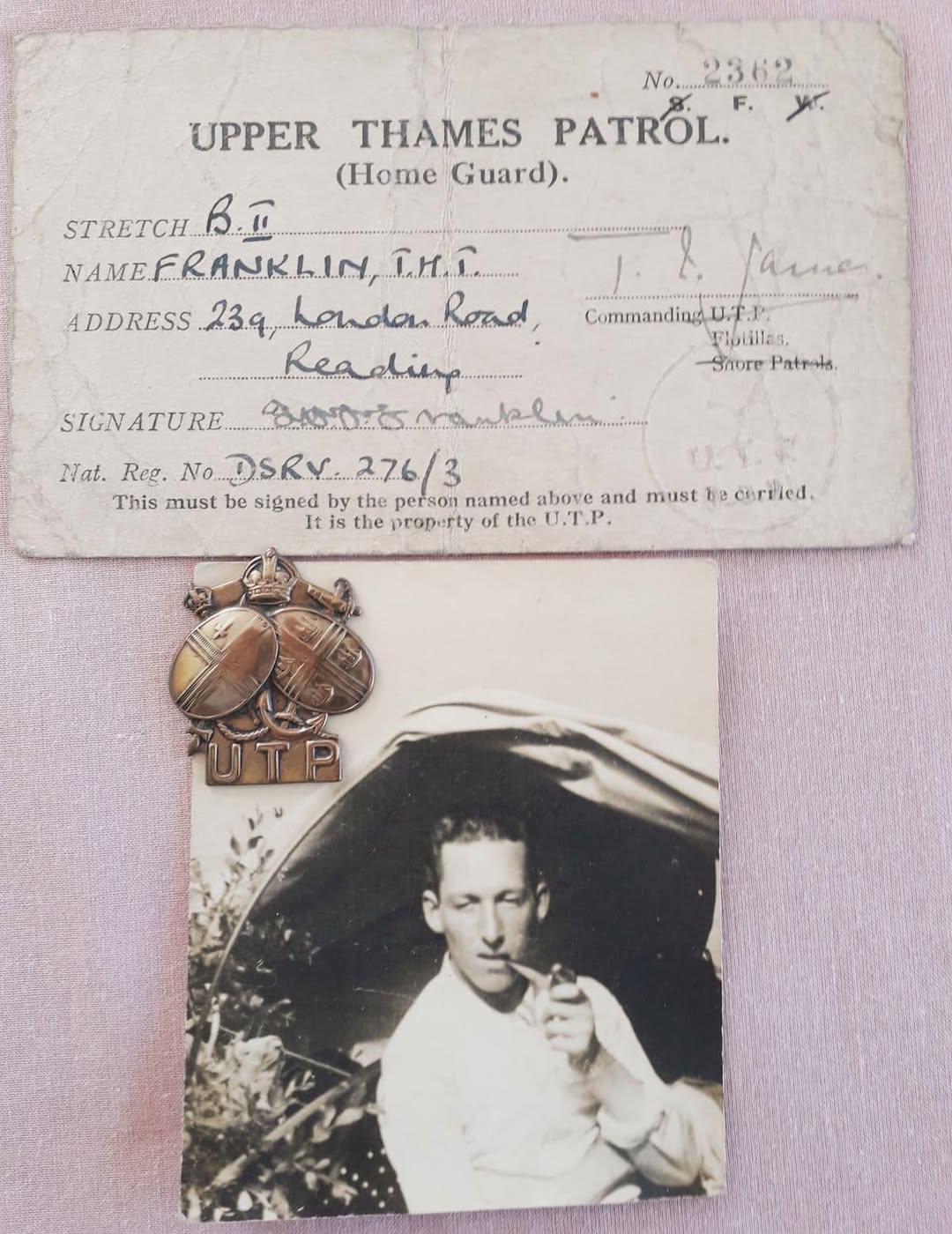
Membership card and cap badge Upper Thames Patrol (Home Guard) membership card for T. H. J. Franklin of Stretch B2, Reading, shown with a UTP cap badge and personal photograph.
The Sugar Story
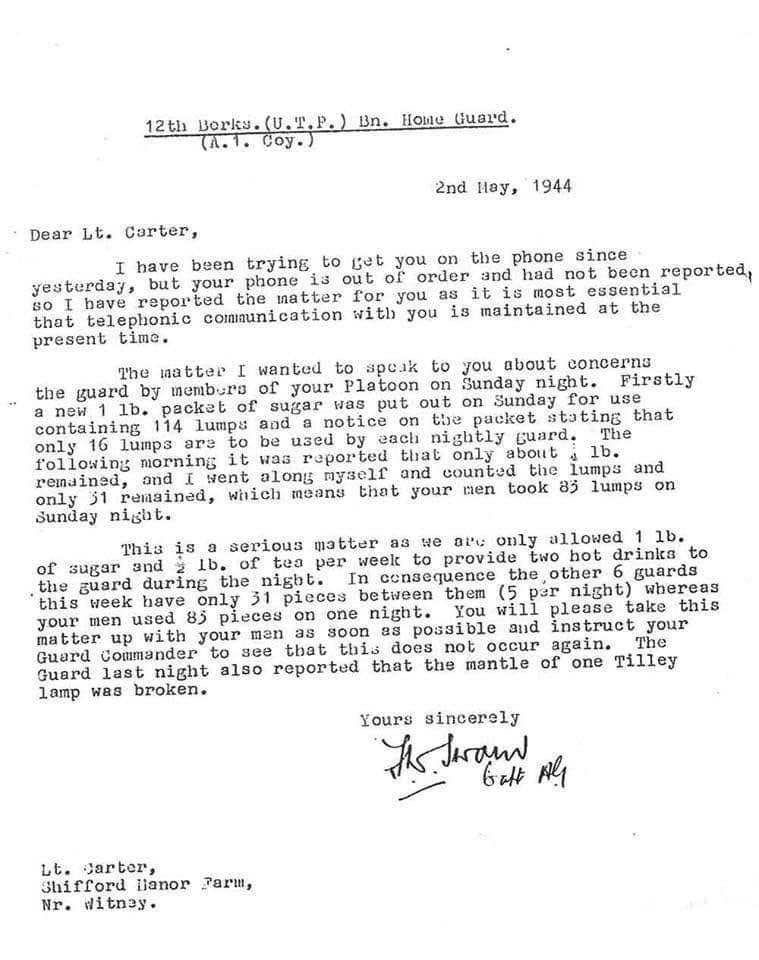
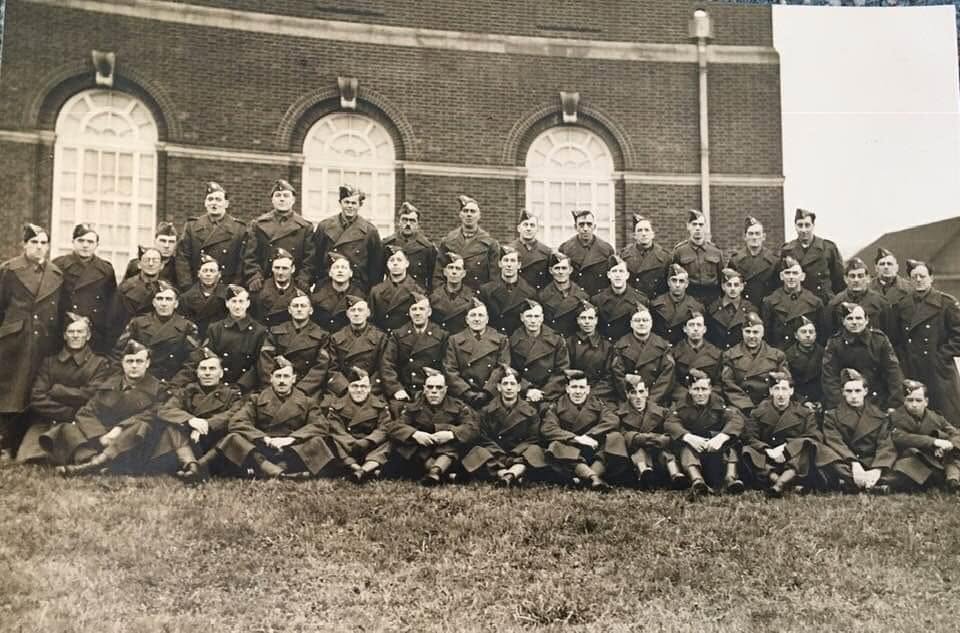
The sugar story A 2 May 1944 letter from 12th Berks (U.T.P.) Battalion Home Guard records a guard using 83 lumps of sugar in one night, leaving only 31 for the rest of the week.A1 Company group Members of the 12th Berks (U.T.P.) Battalion Home Guard, A1 Company, included here with the sugar-ration letter context.
Enemy Agents Guidance
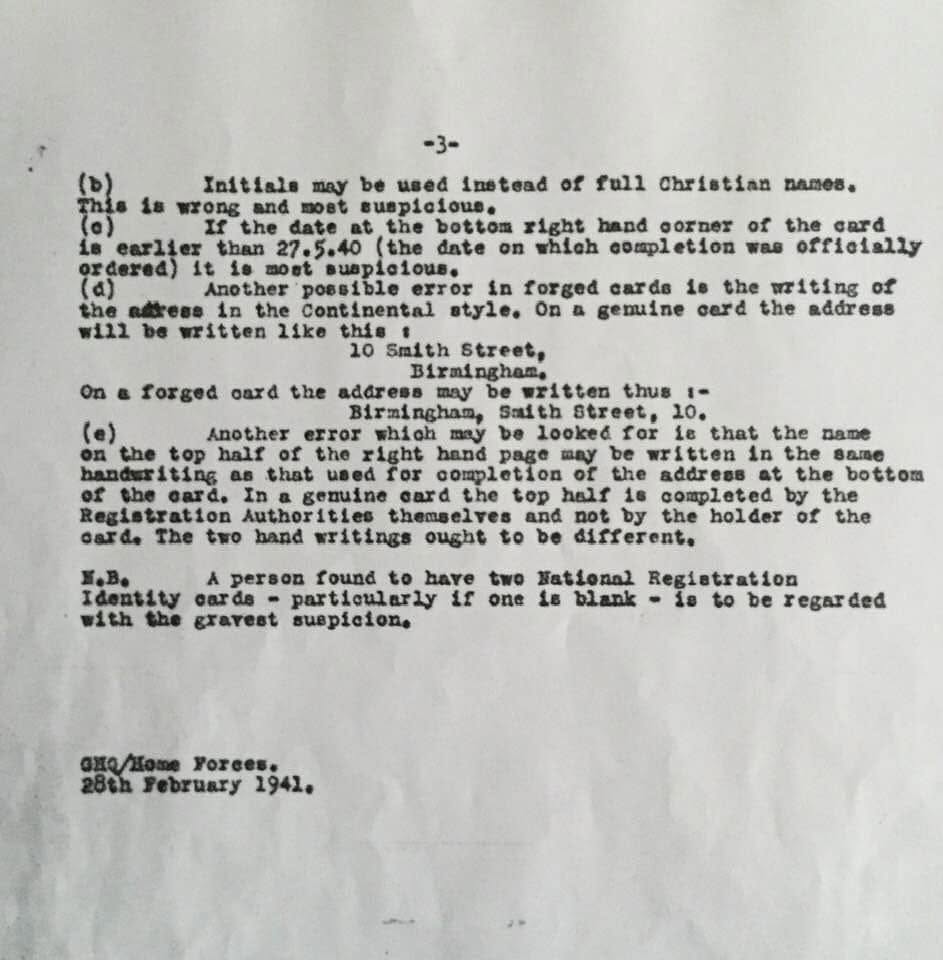
Enemy agents circular, 19 March 1941 A letter sent to Upper Thames Patrol stretch lieutenants circulating notes on the detection of and search for enemy agents.How a spy may come The first page of 1941 guidance describes possible landings by parachute, small boats, aeroplanes or fishing craft, and the kinds of targets a spy might seek.What a spy may look like The guidance lists suspicious behaviour, disguises, wireless equipment, money, maps and identity-card checks as points for guards to consider.Identity-card checks A later page warns how forged National Registration identity cards might be spotted, including suspicious initials, dates, addresses and handwriting.
Doing Their Bit Educational Display
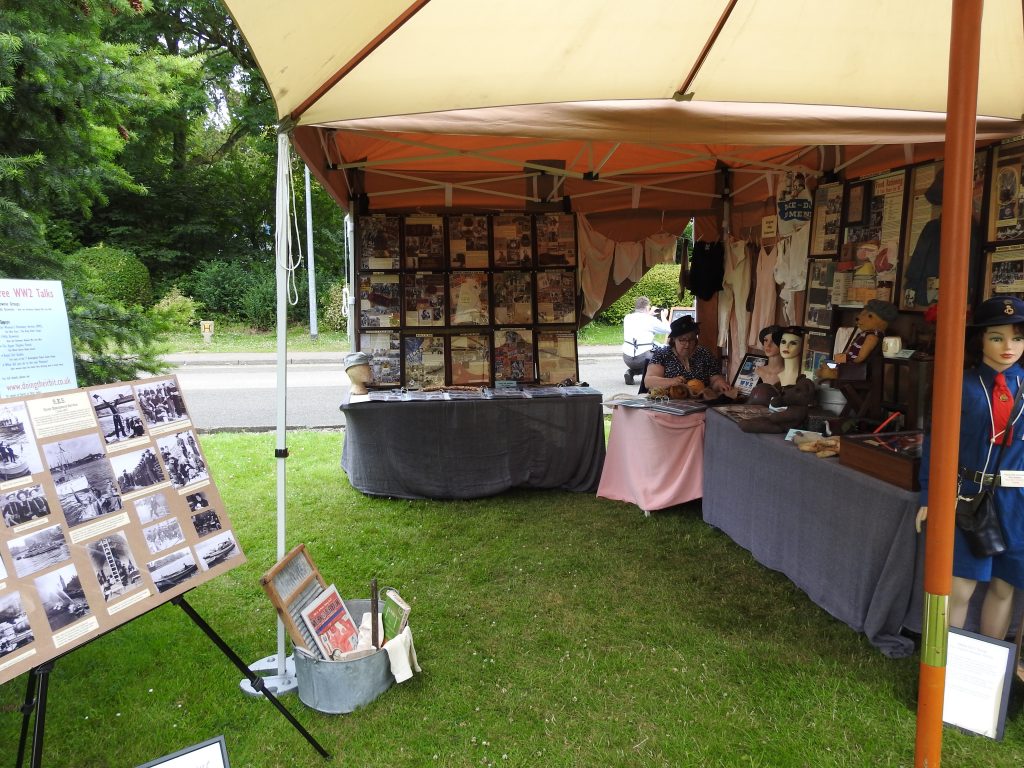
Doing Their Bit has an educational display that includes the Upper Thames Patrol.
Their main display covers Home Front subjects including rationing, WVS, Brownies, Girl Guides and Scouts, make do and mend, washing and ironing, and the UTP. It can be presented as an outdoor gazebo display or adapted for indoor events with tables, memorabilia and mannequins in original uniforms where conditions allow.
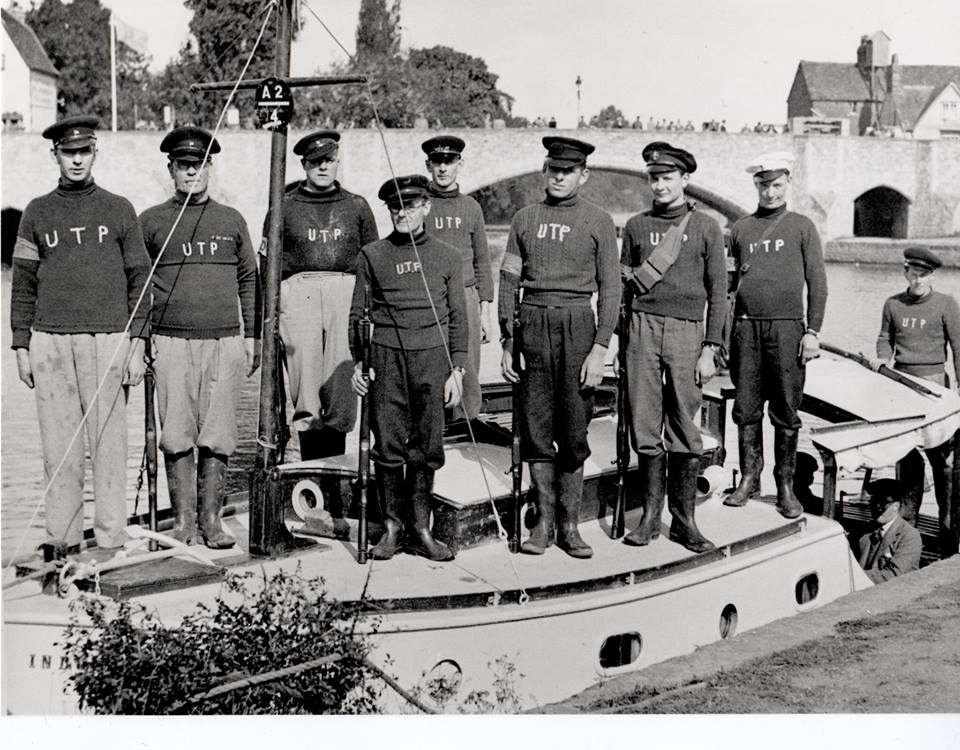
These images keep the Abingdon grouping from Thames at War, including the A2 stretch, Abingdon Bridge, Abingdon Football Club and the review by Sir Ralph Glyn.
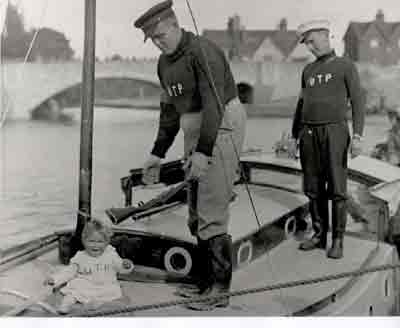
Upper Thames Patrol returns to Abingdon Bridge, August 1940 Scene above Abingdon Bridge, Berkshire. The UTP returns from patrol on Induna; note the two airmen standing on the right from RAF Abingdon.Abingdon, August bank holiday 1940 Early Abingdon UTP photograph downstream of Abingdon Bridge on the motor launch Induna, A2 stretch boat number 4.Downstream of Abingdon Bridge Sid Thomas with his daughter Angela, the patrol mascot, alongside skipper Percy Smith.Review by Sir Ralph Glyn A2 stretch launches pass downstream after assembling upstream towards Abingdon Lock, 15 September 1940.After the review The flotilla comes alongside to embark Sir Ralph Glyn and senior officers before manoeuvres towards Culham Lock.Second Lt. Percy Smith Percy Smith of Shilford Manor Farm, Witney, was in charge of the Abingdon stretch.Abingdon Football Club HQ Early group photograph at the Abingdon UTP headquarters, with named members recorded in the original caption.Abingdon group Another group photograph of Abingdon UTP members at Abingdon Football Club.Instructional course Abingdon members after training, with a regular soldier instructor seated near Lt. Percy Smith.
UTP Photos, Marlow and Windsor
Old Windsor Lock UTP helmsman aboard a cruiser, possibly entering Old Windsor Lock.Entering Old Windsor Lock The Upper Thames Patrol, the Home Guard Navy, entering Old Windsor Lock.Marlow weir, 1942 Members of the UTP Middlesex 31st Battalion inspect Marlow weir; one carries a Browning automatic rifle.Cliveden Reach UTP patrol near Maidenhead.Windsor Home Park UTP crew holding a mooring line.Inspection parade A boat arrives at Windsor Home Park for an inspection parade.Ready for inspection Boats moored at Windsor Home Park before inspection.HQ staff UTP headquarters staff photographed at Yeomanry House, Reading.Staines and Lady Isobel Members of numbers 4 and 6 platoon near Staines with the launch Lady Isobel, also a Dunkirk Little Ship; their meeting room was the Phoenix pub.
UTP Photos, Women
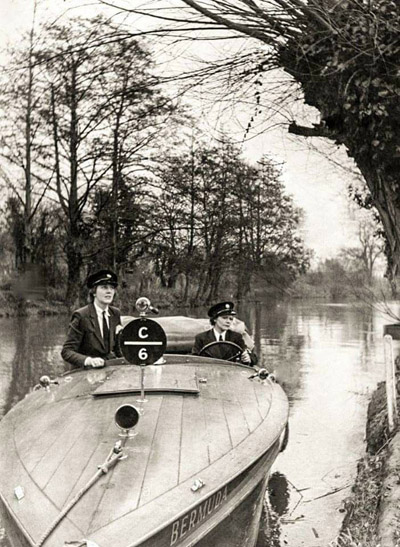
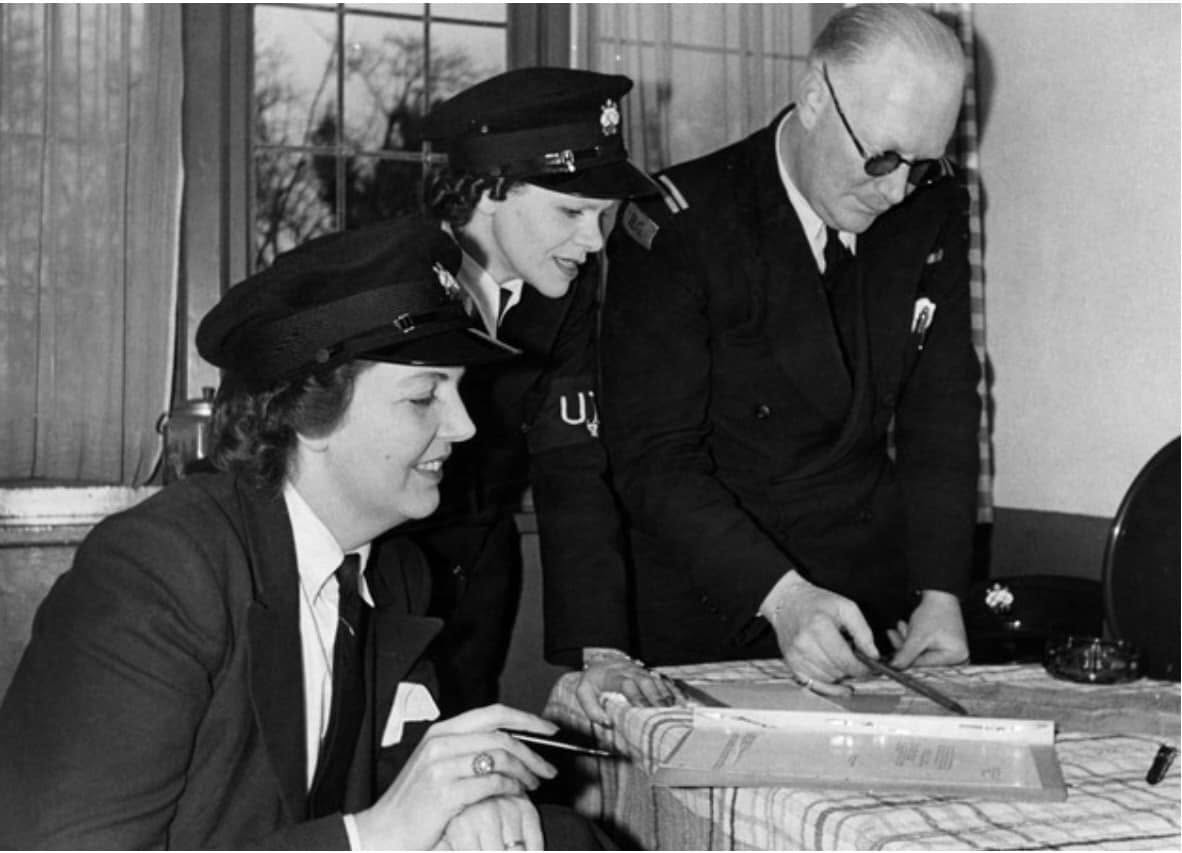
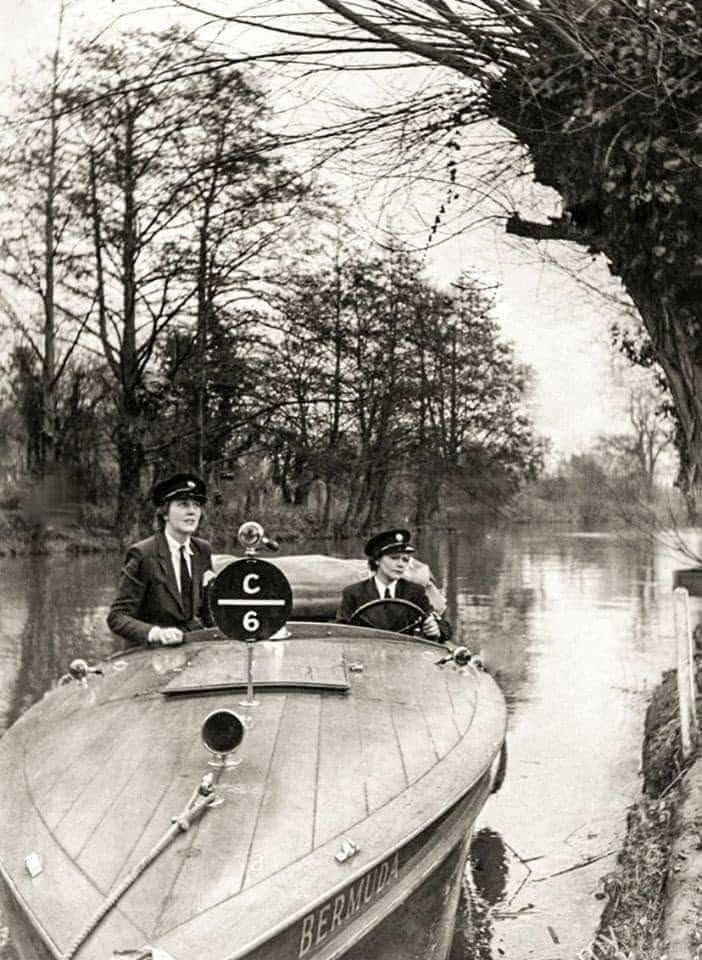
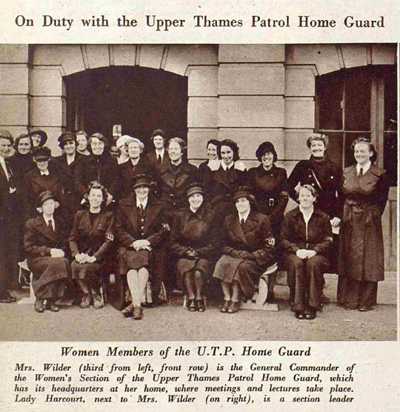
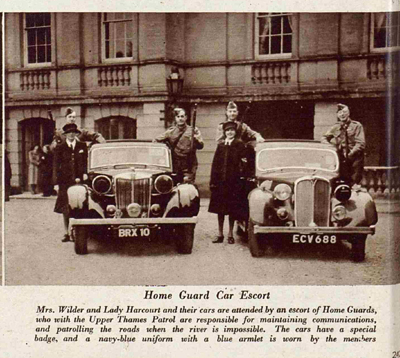
Women worked with the UTP from 1940, despite wider War Office restrictions on women enrolling in the Local Defence Volunteers and later Home Guard. The UTP's use of women as helms and crew is one of the most distinctive parts of its story.
Launch Bermuda, Maidenhead, January 1941 Mrs W C Thiele (right) and Mrs P Bartlett were helmsmen of patrol launches of the Upper Thames Patrol. Photographed at Maidenhead, where they had been on active service since the inception of the UTP. Photo by Watford/Mirrorpix/Mirrorpix via Getty Images.Night patrol briefing, Maidenhead, January 1941 Mrs W C Thiele (right) and Mrs P Bartlett, helmsmen of Upper Thames Patrol launches, receive instructions from Lieutenant Thiele for their night patrol duty. They had been on active service at Maidenhead since the inception of the UTP.UTP ladies at Maidenhead Women of the Upper Thames Patrol aboard Bermuda near Maidenhead.Women in the UTP Women worked as unofficial auxiliaries before official Home Guard arrangements for women were introduced.Unofficial auxiliaries Archive photograph from the Thames at War women category.UTP women's contribution Archive photograph from the Thames at War women category.
A1 Stretch, Swinford to Osney
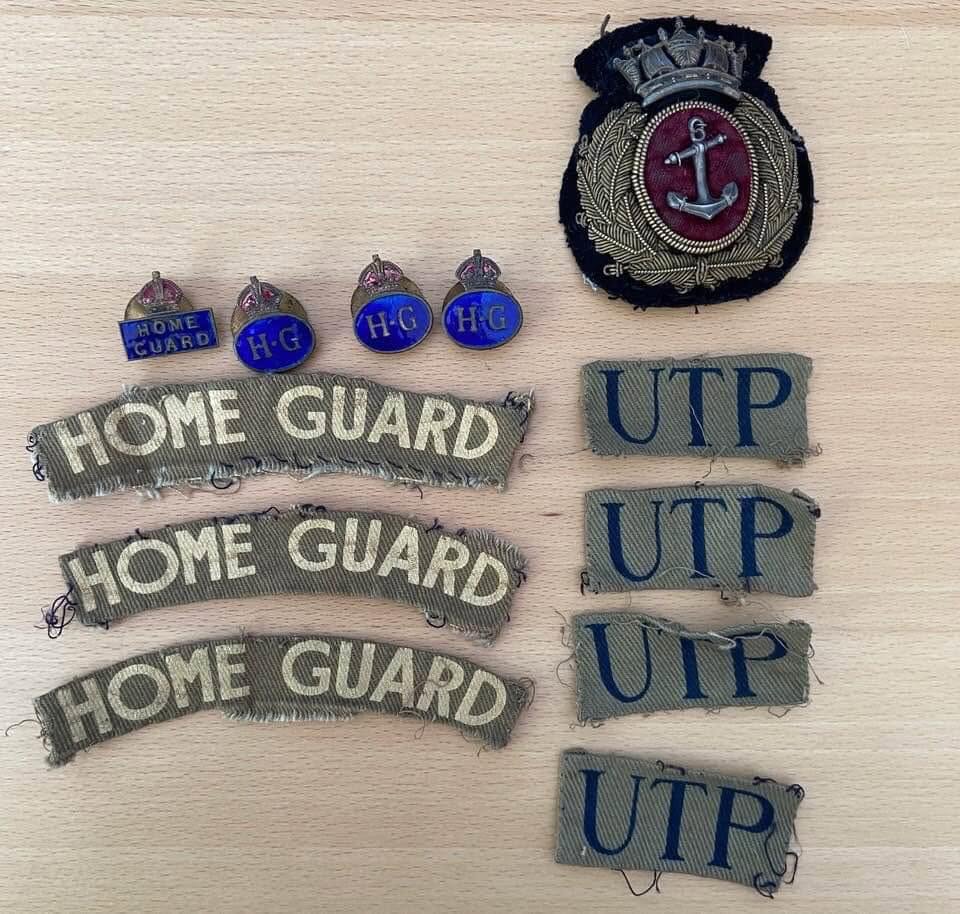
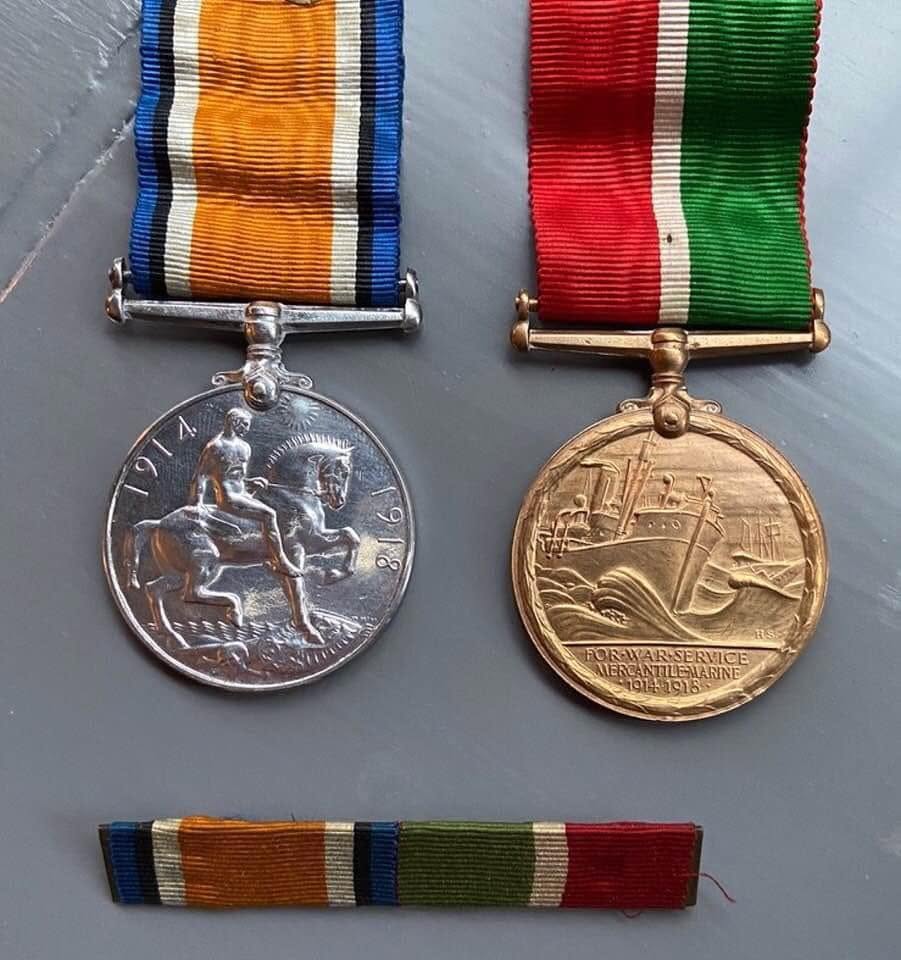
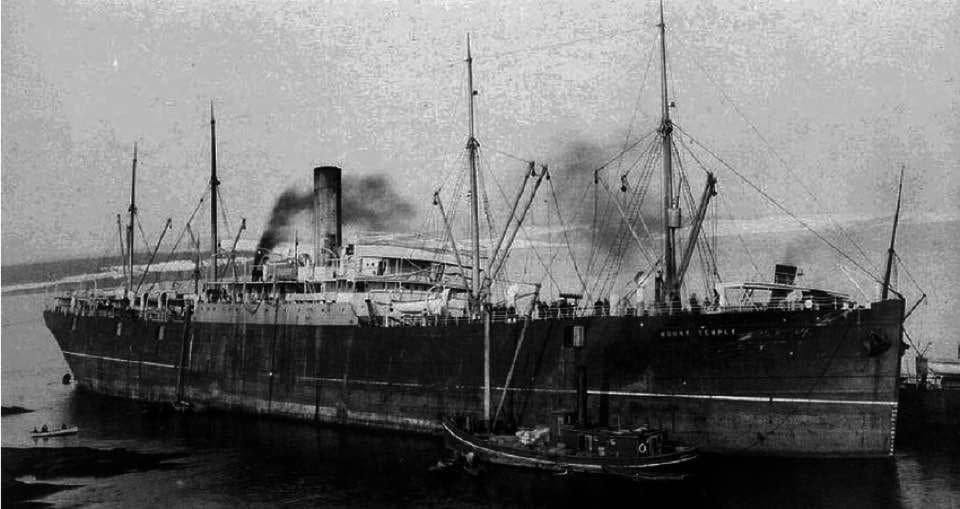
This group of photographs was shared to help identify the story behind a UTP member from A1 Stretch, the section between Swinford and Osney, Oxford. The main group photograph is believed to show the stand-down parade at Swinford Waterworks in late November or early December 1944. He lived at Farmoor Bungalows, housing for GWR workers within easy walking distance of Swinford. He had previously served in the Merchant Navy during the First World War, was a prisoner of war from 1916 to 1918, and had served on SS Mount Temple, a ship associated with the rescue efforts after the Titanic disaster.
Swinford Waterworks stand-down parade, late 1944 Believed to show the A1 Stretch stand-down parade at Swinford Waterworks in late November or early December 1944.A1 Stretch member The UTP member lived at Farmoor Bungalows, built for GWR workers, close enough to walk to Swinford and the A1 Stretch patrol area.UTP and Home Guard insignia Home Guard badges, armbands and UTP shoulder titles associated with this A1 Stretch group.First World War service Medals connected with the same man, reflecting earlier Merchant Navy service and imprisonment as a POW from 1916 to 1918.SS Mount Temple His First World War Merchant Navy service included SS Mount Temple, a ship remembered for helping with the rescue efforts after the Titanic disaster.
UTP Photos, General
General Patrol Views
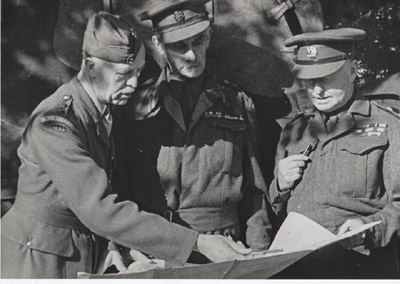
Shore patrol command Sir Price-Davies VC, UTP shore patrol commander, with staff officer and a major general.Shiplake Lock, 28 July 1940 Thomas Ashley Church and Richard Hobbs prepare to join the UTP review at Henley Sailing Club, Wargrave.Cookham Lock UTP cruisers entering the lock with BAR and P17 rifles visible.Manning Cookham Lock UTP crew working at the lock.Wargrave, 8 April 1940 Rear Admiral Sir Basil Brooke takes the salute during an inspection of UTP boats near Henley.Semaphore A UTP member using semaphore flags.Old Windsor Lock UTP boats in the lock, including one named Dalhousie.
George Allison at Teddington
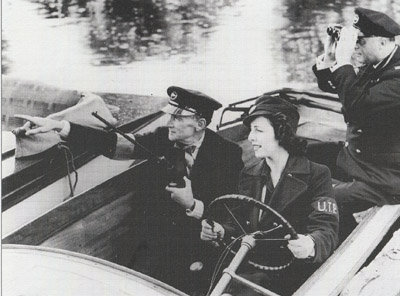
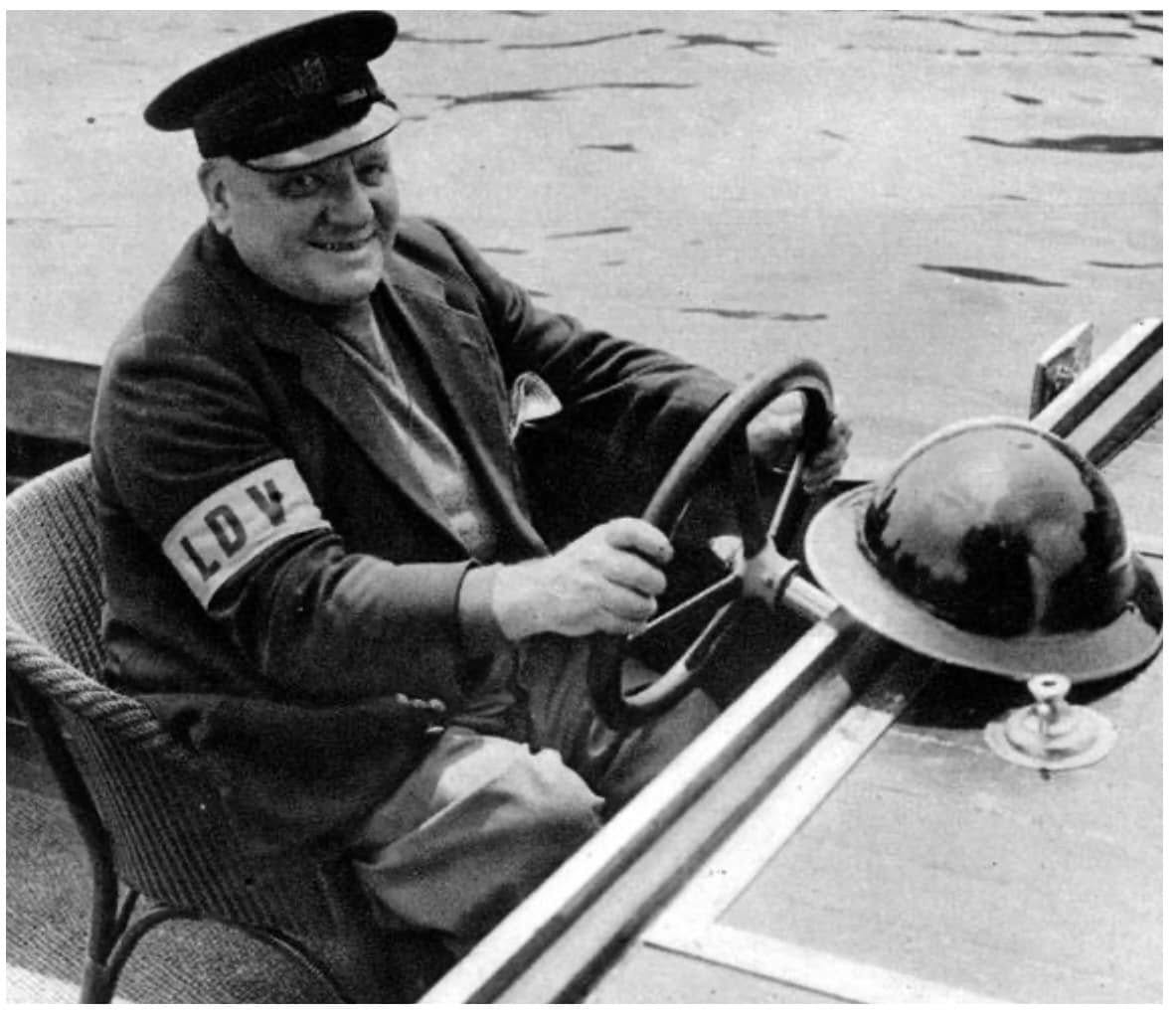
Teddington, 18 August 1940 George Allison (1883-1957), manager of Arsenal Football Club, stands on the riverbank as he joins a flotilla of river cruisers and motorboats of the Upper Thames Patrol on the River Thames at Teddington, Berkshire. Photo by M. McNeill/Fox Photos/Hulton Archive/Getty Images.George Allison at the wheel The man at the wheel is George Allison, manager at the time of Arsenal Football Club, wearing an LDV armband while aboard an Upper Thames Patrol launch.George Allison and LDV crew George Allison boards an Upper Thames Patrol launch among Local Defence Volunteers, connecting the patrol's river work with the early Home Guard period.
Sea Dawn and George Raymond Garlick
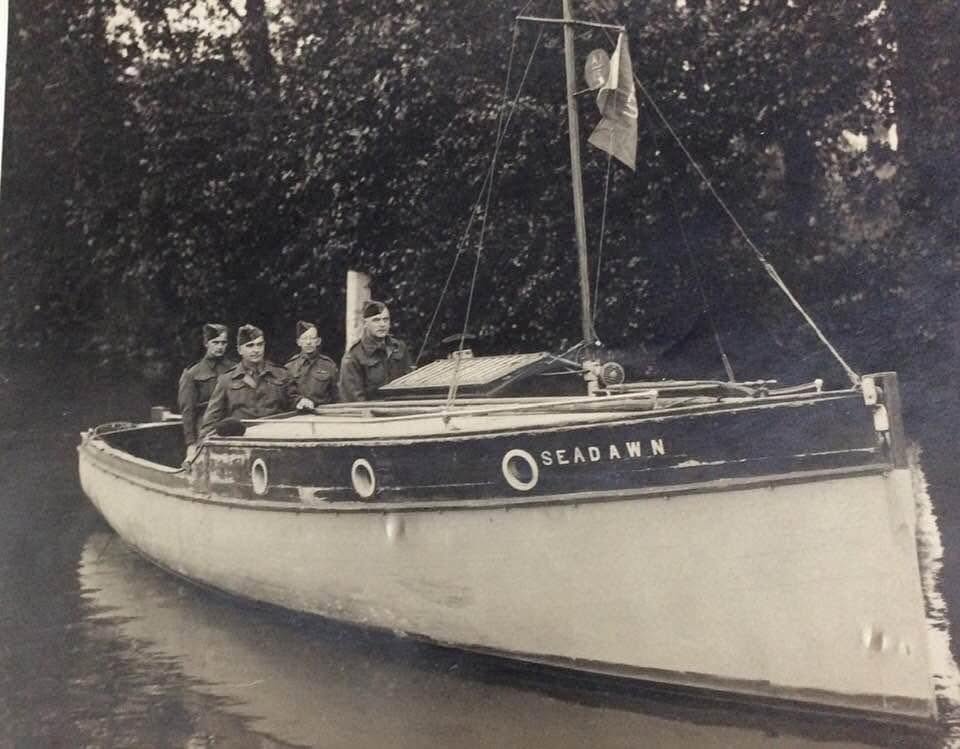
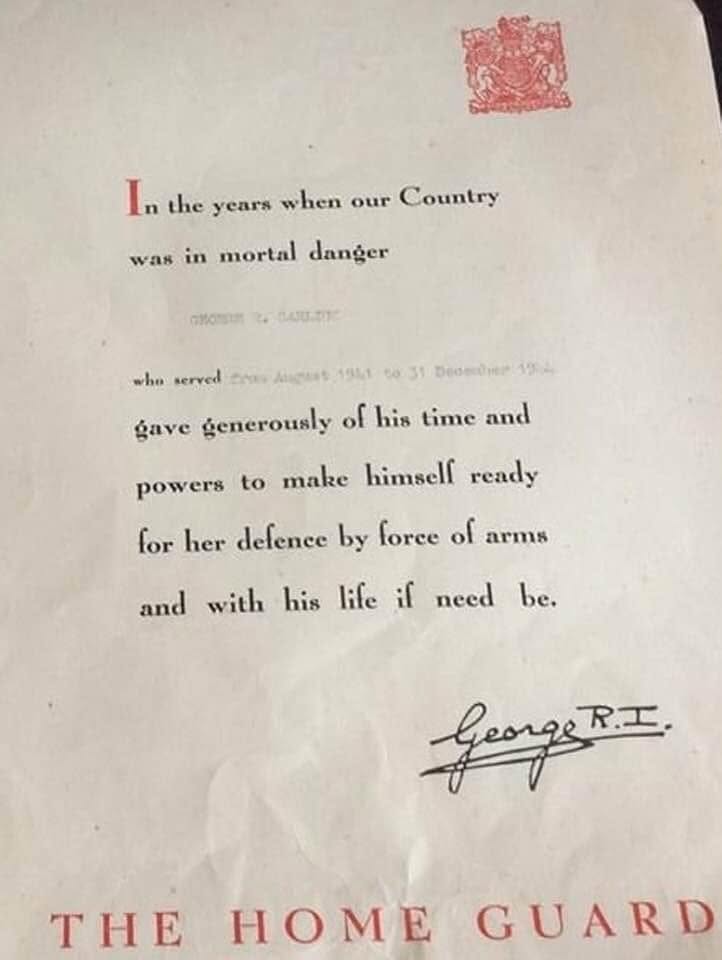
Sea Dawn, A1 StretchSea Dawn served with the Upper Thames Patrol, the Home Guard Navy, on A1 Stretch from Lechlade to Oxford. The original owner was from the Radley area: George Raymond Garlick, born 1914, a mechanic in a reserved occupation. Sea Dawn was based at Osney Lock, Oxford, crewed by officers and boys from the Oxford Sea Cadet Corps, and after the war was used by the Sea Cadet Corps for training until the 1960s.George Raymond Garlick certificate Home Guard service certificate associated with Sea Dawn's original owner, George Raymond Garlick of the Radley area.
Baby Greyhound, UTP HQ Launch
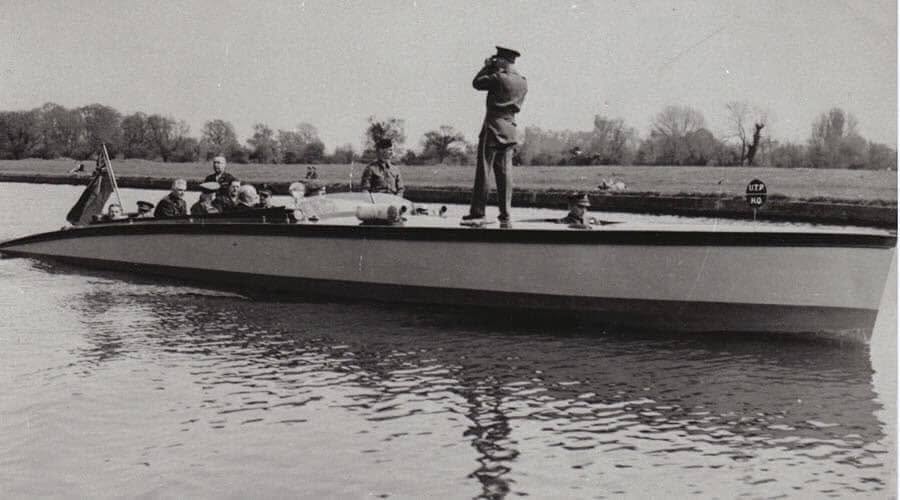
Baby Greyhound, UTP HQ launch, spring 1944Baby Greyhound, a 50 ft slipper launch and reputedly the largest slipper launch ever built, was requisitioned by the UTP in 1942. The bow shows a UTP HQ sign and Windsor Castle can just be seen in the background. US officers are on board, including General Eisenhower, General J. Lawton Collins, known as Lightning Joe, and Chief of Staff Walter Bedell Smith; Winston Churchill may also be present, as he was in the area at the time. Note the Red Ensign and the Lewis gun mountings on the foredeck. The launch is currently offered for sale at £180,000.
Upper Thames Patrol Boat Plaques
Imara: a surviving UTP boat
Imara was rescued from destruction by Paul Hadley, who later discovered that the boat had an Upper Thames Patrol connection. A follow-up visit and original photographs of the boat in use by the UTP at Windsor have since helped confirm the identification, possibly during the King's inspection at Windsor Home Park in 1943 or 1944.
Imara was bought new around the late 1930s and was berthed near the Leathern Bottle above Cleeve Lock, near Goring on the River Thames. She was requisitioned by the UTP in 1942 and returned after the war, remaining with the same family for just over 80 years.
Her survival is especially significant because she still has a service plaque, a rare survival in its own right. Current research suggests that Imara may be the eighth known surviving UTP boat out of 260, with seven survivors in the UK and one in California, USA.
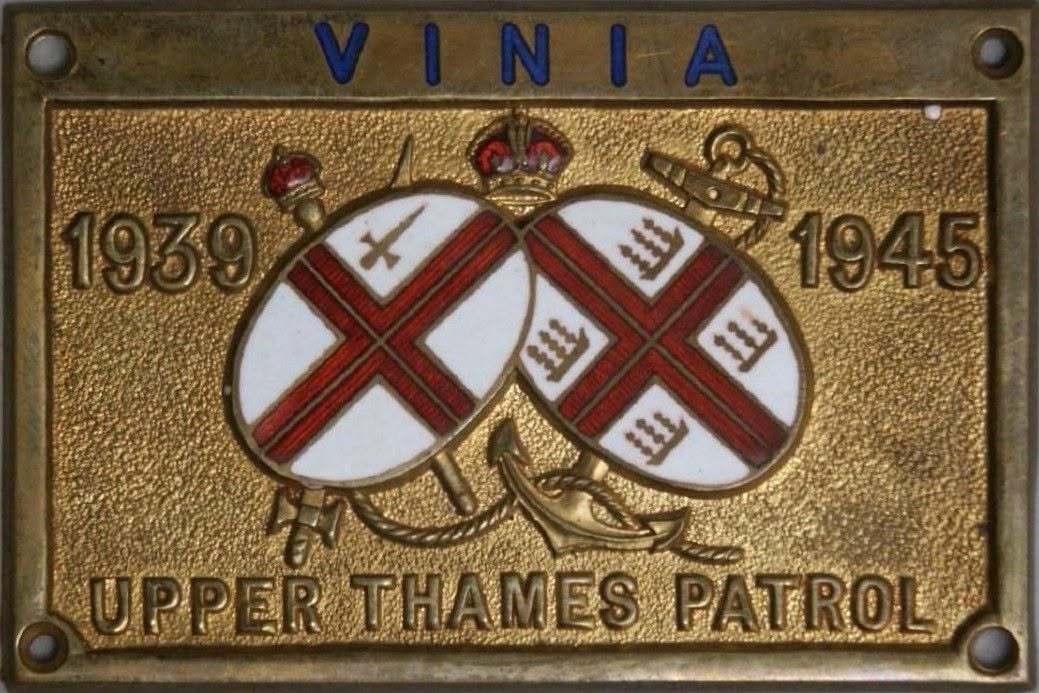
At the end of the Second World War, plaques were issued to launches that had taken part in the Upper Thames Patrol. Each plaque was engraved with the boat's name, making it unique to that particular vessel.
This example is engraved VINIA. The type of launch VINIA was has not yet been identified, and it would be especially valuable to trace surviving examples belonging to slipper launches.
Slipper launches known to have served in the UTP include:
Baby Greyhound - Andrews
Lake Lucerne - Andrews
Toorak - Andrews
Lusimus - Meakes
Golden Wedding - Hobbs
There were many more, particularly Meakes launches. John Hobbs, proprietor of Meakes of Marlow, served as a lieutenant in the Upper Thames Patrol.
We use strictly necessary cookies to run this website and optional analytics cookies to understand site usage. You can accept or decline optional cookies.